Pre-tested and KC compliance-ready 4G GPS smartwatches, discreet insoles, and ultra-compact location tags designed for wholesale distribution, institutional deployments, and brand licensing in Korea.
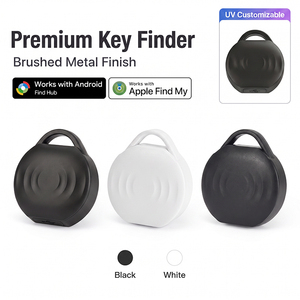
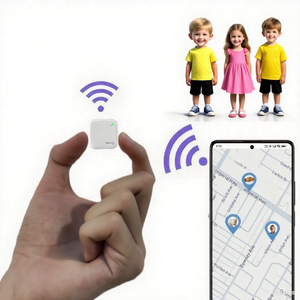
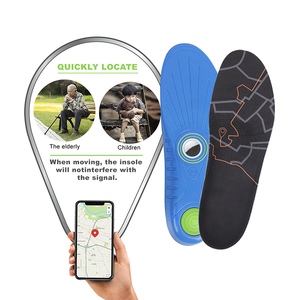
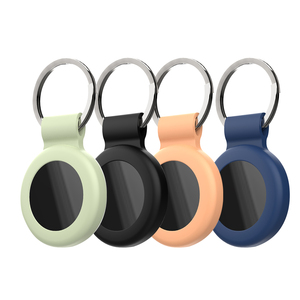
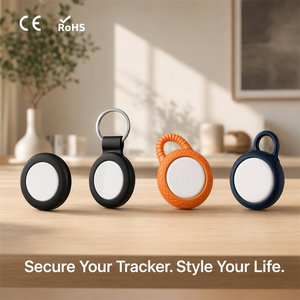
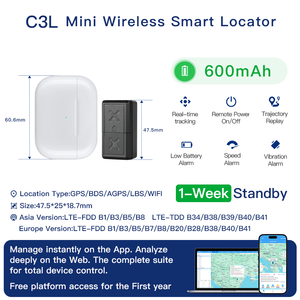
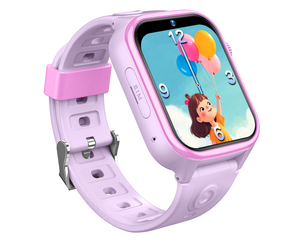
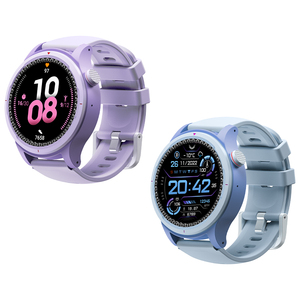
As a specialized original equipment manufacturer (OEM) and design manufacturer (ODM), our manufacturing plant operates dedicated SMT lines engineered to meet South Korea's stringent radio frequency and consumer electronic standards.
South Korea represents one of the most technologically advanced yet uniquely demanding domestic markets for IoT tracking hardware. With hyper-dense metropolitan areas like Seoul, Incheon, and Busan characterized by high-rise residential complexes and multi-level underground transit systems, traditional GPS tracking technologies frequently encounter severe urban canyoning signal attenuation.
To deliver true white-paper-grade reliability for Korean families, our manufacturing center integrates multi-constellation GNSS chipsets (combining GPS, GLONASS, BeiDou, and Galileo) alongside dual-band Wi-Fi Positioning System (WPS) sniffing and Cell Tower Triangulation (LBS). This multi-layered hybrid positioning strategy ensures seamless tracking transition from outdoor mountain trails to deep multi-story academic buildings (Hagwons).
Our OEM firmware is architected around ultra-low-power consumption states (eDRX and PSM), engineered specifically to maintain constant network registration across Korean telecom towers without depleting small-capacity lithium batteries on child-friendly wrist wearables.
| Cellular Bands | LTE-M / Cat-M1 / NB-IoT / 4G VoLTE (SKT, KT, LG U+) |
|---|---|
| Location Tech | GPS + GLONASS + Wi-Fi BSSID + LBS Hybrid Positioning |
| Indoor Accuracy | Wi-Fi Sniffing: 5m–15m | Outdoor GNSS: <2.5m |
| Compliance | KC Mark, PIPA, RoHS, CE, FCC, IP67/IP68 Waterproof |
| System OS | RTOS / Customized Distraction-Free Android OS |
From micro-geofencing around educational academies to low-power tracking in dense mountain terrains, explore how our hardware adapts to South Korea's unique cultural and geographical landscape.
Korean children often navigate multiple private academies in districts like Daechi-dong or Mok-dong after standard school hours. Our trackers feature automated Wi-Fi SafeZone triggers that send instant arrival and departure notifications to parents' smartphones without requiring the child to manual check-in.
In accordance with South Korea's "Min-sik Law" enhancing elementary school zone safety, our devices deliver high-frequency location updates (every 10 seconds) whenever a child enters designated school safety perimeters, providing real-time trajectory visualization for guardians.
South Korean families regularly engage in outdoor mountain trekking. IP68 dust-and-waterproof tags combined with specialized low-frequency RF beaconing enable emergency signal transmission even in mountainous valleys with sparse cellular tower density.
For children with special developmental needs or eldercare in aging Korean demographics, our hidden smart insoles offer complete anti-loss security without visible wrist paraphernalia, preserving personal dignity while transmitting uninterrupted telemetry.
Korean public schools maintain strict mobile phone usage guidelines. Our custom operating system implements geofenced "School-Fi Focus Modes" that automatically silence incoming calls, display screens, and alerts during instructional hours while preserving underlying SOS panic button activation.
Navigating underground transit corridors in Seoul Metro Line 1-9 requires specialized Wi-Fi fingerprinting. Our trackers continuously sample public metro Wi-Fi router IDs to map underground transit paths accurate to specific station platforms.
Stay ahead of market shifts with hardware designed to meet evolving telecom mandates and parental privacy standards across East Asia.
With legacy 2G networks completely shut down in South Korea and 3G sunsetting rapidly across SKT and KT networks, modern tracker hardware must rely exclusively on LTE Cat-M1 (eMTC). Our factory manufactures devices with localized radio firmware supporting HD VoLTE voice calls over low-power cellular bandwidth.
Traditional Wi-Fi positioning calculates signal strength (RSSI), which varies wildly through concrete walls. Our newest 2025/2026 hardware modules integrate Wi-Fi RTT protocols to measure time-of-flight distance, enabling accurate vertical floor identification in tall Korean apartment towers.
Driven by Korean policy initiatives curbing youth smartphone addiction, consumer demand has shifted away from open smartwatch platforms toward enclosed, purpose-built safety tags and zero-social-media wearables featuring closed contact whitelist management.
Korean parents prioritised local server hosting and encrypted telemetry. Our OEM solutions provide white-label RESTful APIs and SDK integrations allowing Korean importers to stream real-time location coordinates directly to AWS Seoul (ap-northeast-2) cloud infrastructures.
End-to-end electronic design, SMT placement, radio frequency tuning, and strict quality control customized for South Korean electronics importers.
We supply complete software development kits (SDKs) and MQTT API documentation, enabling your software engineers to bind our hardware directly to custom KakaoTalk notification systems or local Android/iOS apps.
Our in-house radio frequency laboratory conducts rigorous EMI/EMC testing prior to export, drastically reducing your device testing timeline at Korean certification agencies like RRA and KTL.
All child wearable casings use food-grade silicone watch bands and biocompatible ABS plastic polymers verified under EU RoHS and Korean consumer product safety acts.
Comprehensive answers regarding cellular band compatibility, KC regulatory processes, minimum order quantities, and custom white-label engineering.
Yes. Our hardware modules are specifically flashed with RF configurations matching Korean telecom frequency bands: LTE Cat-M1 Bands 1, 3, 5, 8, and 28. Our devices support local eSIMs and nano-SIM cards from SK Telecom, KT Corporation, LG U+, as well as regional MVNOs (알뜰폰 carriers).
We provide full engineering documentation, schematics, PCB layouts, and pre-test EMC/RF lab reports. If desired, we can coordinate directly with accredited South Korean testing houses (such as KTL, KTC, or KTR) to ensure your custom OEM model secures KC Mark approval seamlessly.
Our devices feature a hybrid positioning engine. When satellite GPS signals are obstructed by tall apartment towers or commercial complexes in cities like Seoul or Busan, the tracker automatically switches to Wi-Fi MAC address sniffing (WPS) and cell tower LBS positioning to pinpoint location within multi-story structures.
Absolutely. We offer complete server SDKs and API webhooks allowing all real-time location data to be hosted directly on your own private cloud infrastructure located within AWS Seoul region (ap-northeast-2), ensuring strict compliance with South Korea’s Personal Information Protection Act (PIPA).
Standard white-label orders with custom logo branding on packaging and device casings start at 500 units. Full ODM projects involving custom tooling, bespoke PCB designs, or specialized form factors (like smart insoles) typically require an initial manufacturing run of 2,000 units.
We utilize cold-temperature resistant Lithium-Polymer (Li-Po) battery cells rated to operate efficiently down to -20°C. Coupled with intelligent power management software (PSM/eDRX), battery performance remains stable even during freezing winter months in northern provinces.
Partner with an experienced OEM/ODM factory equipped to deliver KC-certified, LTE Cat-M1 enabled, and highly accurate kids tracking hardware tailored to South Korea's high-tech market.
Contact Us