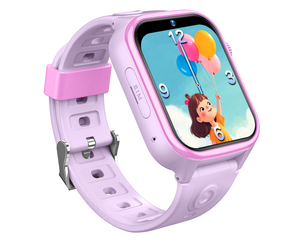
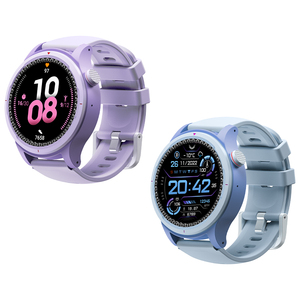
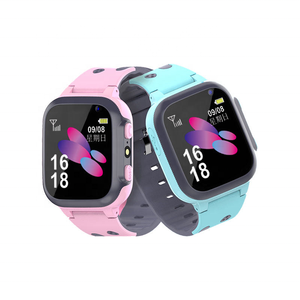
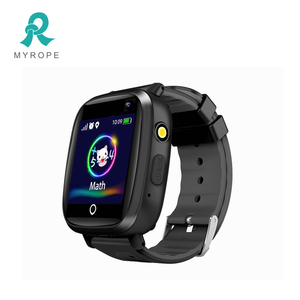
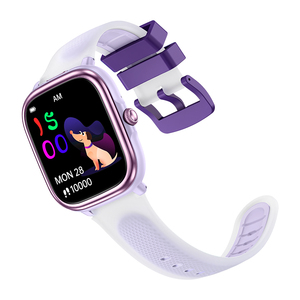
Precision-engineered hardware platforms ready for custom firmware, localized branding, Japanese TELEC certification, and tailored sensor integration.
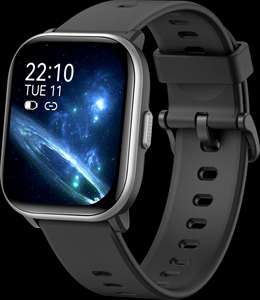
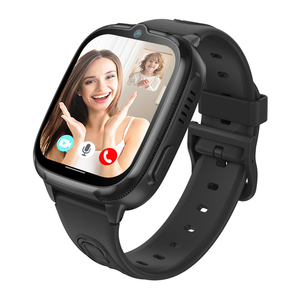
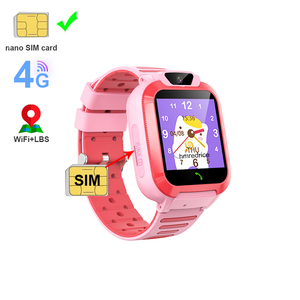
Insights into technical compliance, consumer expectations, and manufacturing standards required for market leadership in the Japanese wearable ecosystem.
Japan represents one of the most sophisticated wearable technology markets globally, characterized by high consumer expectations for micro-electronics engineering, battery efficiency, and stringent regulatory oversight. Sourcing or customizing an OEM Bluetooth smartwatch for Japanese enterprise clients, institutional buyers, or retail brands demands far more than off-the-shelf assembly.
To successfully launch a commercial Bluetooth smartwatch line in Japan, OEM manufacturing partners must align hardware development with TELEC (Radio Law compliance), JATE (Telecommunications Business Law), and PSE (Electrical Appliance and Material Safety Law) for lithium-ion power cells. Furthermore, software UX must support native Japanese typography (Kanji/Kana optimization), seamless integration with localized messaging platforms like LINE, and robust privacy frameworks compliant with Japan's Act on the Protection of Personal Information (APPI).
Tailored hardware and firmware configurations engineered to meet distinct demographic, social, and industrial needs in Japanese urban and regional centers.
Japanese elementary school children frequently walk to school independently. Our OEM platforms integrate hybrid Bluetooth 5.4, GPS, Wi-Fi, and LBS triangulation to provide real-time location history without triggering strict school distraction policies. Geofencing capabilities ("School-Fi" and SafeZone alerts) automatically mute non-essential alerts while keeping emergency SOS calling active.
Addressing Japan’s hyper-aging society (Chōkōreishakai), our custom smartwatch solutions incorporate medical-grade PPG optical sensors for continuous heart rate, SpO2, and arrhythmia detection. Integrated 3-axis accelerometer/gyroscope algorithms deliver accurate fall-detection alerts routed directly to family caregivers or care service operators via customized SDKs.
Designed for Japanese construction firms, logistics hubs, and manufacturing facilities. Wearables equipped with BLE mesh beacon capability enable indoor positioning across multi-story steel structures, tracking worker exertion, ambient temperature exposure (heatstroke warning systems), and lone-worker emergency signals.
Custom OEM wearables designed for integration into Japanese corporate Kenkō Keiei (Health and Productivity Management) initiatives. Device data syncs effortlessly via low-energy Bluetooth to corporate wellness portals or LINE Mini-Apps, allowing employees to track activity, sleep efficiency, and stress markers while preserving personal privacy controls.
IP68 water resistance up to 50 meters, sunlight-readable AMOLED touch screens, and low-power GPS chipsets catering to Japan's outdoor and marathon community. Customizable workout algorithms cover running, cycling, hiking, and swimming with high data accuracy.
Specialized institutional wearables featuring contactless NFC or BLE identification for access control, automated attendance logging in schools, and cashless micro-payments within closed campus ecosystems across Tokyo, Osaka, and Nagoya.
How modern wearable hardware engineering is evolving to stay ahead of regulatory changes, battery demands, and ecosystem integration requirements.
Japanese buyers prioritize battery endurance alongside sleek form factors. Modern OEM smartwatch architecture utilizes a dual-processor design: an ultra-low power core (e.g., Ambiq Apollo series or Nordic nRF5340) for continuous background biometric tracking and background BLE beaconing, paired with a high-performance graphics core driving fluid 60Hz AMOLED UI rendering. This dramatically extends battery life beyond 7–14 days per charge.
Japan’s Ministry of Internal Affairs and Communications (MIC) mandates strict radio frequency testing under TELEC. Standard Bluetooth transmitters often fail due to harmonic emissions or antenna efficiency drop-offs when placed against human skin. Our factory employs specialized ceramic patch antennas and fine-tuned impedance matching to guarantee pass rates for TELEC certification without delaying market entry timelines.
With LINE serving as Japan’s dominant communication tool (over 95 million active monthly users), OEM software stacks must support BLE push notifications formatted for Japanese character encodings (Shift-JIS / UTF-8) and enable direct API integration with LINE Messaging API and LINE Mini Apps. This allows end-users to receive family alerts, health reports, and system notifications without downloading redundant third-party applications.
In response to Japan's stringent Act on the Protection of Personal Information (APPI), leading OEM providers are shifting sensitive biometric analysis directly onto the watch chipset (Edge AI). Raw PPG wave data and motion vectors are processed locally to compute stress scores, heart rate variability (HRV), and fall detection, transmitting only anonymized summaries to cloud servers.
Comprehensive technical matrix detailing hardware, software, and compliance options available for Japanese market customization.
| Architecture Module | OEM Customization Options & Japanese Market Parameters |
|---|---|
| Main Processor / SoC | Nordic Semiconductor (nRF52840 / nRF5340), Ambiq Micro Apollo4, Realtek RTL8763E Dual-mode BLE 5.4 + BT 3.0 audio. |
| Display Hardware | 1.3" to 1.96" HD IPS / AMOLED touch screens (320x386 to 466x466 resolution), 2.5D curved tempered glass with anti-fingerprint oleophobic coating. |
| Connectivity & RF | Bluetooth Low Energy 5.4, Dual-Frequency GPS / GLONASS / QZSS (Michibiki satellite optimization for Japan), Wi-Fi positioning, NFC for access control. |
| Biometric Sensors | Multi-channel optical PPG (GH3011 / VC9201) supporting continuous Heart Rate, SpO2, Blood Pressure estimation, ECG (optional), Skin Temperature, 3D Accelerometer + Gyroscope. |
| Japanese Regulatory Standards | TELEC (Radio Law certification mark), JATE (Telecommunication Law), PSE certified Li-ion batteries (UN38.3 + MSDS documentation), RoHS 2.0, REACH. |
| Waterproof Rating | IP67, IP68 (1.5m / 30 mins), or 5ATM (50m pressure chamber testing for swimming models). |
| Firmware & OS Localization | Custom RTOS firmware, full Japanese character rendering (Kanji, Hiragana, Katakana), custom watch faces, FOTA (Firmware Over-The-Air) remote update support. |
| Enclosure & Materials | CNC Machined Aircraft Aluminum, Stainless Steel 316L, High-density Polycarbonate + Fiberglass, Hypoallergenic Food-grade Silicone or Milanese straps. |
| Companion Mobile Apps | Customized iOS & Android apps (white-label), SDK / API connectivity for LINE, AWS Japan server deployment, APPI compliant database structure. |
Combining advanced SMT production lines, rigorous environmental testing, and deep experience in international compliance to deliver defect-free wearables.
Our state-of-the-art manufacturing facility operates under strict ISO quality management frameworks. We utilize Dust-Free Cleanrooms (Class 10,000) for screen lamination, optical sensor placement, and waterproof sealing, ensuring exceptional product yield rates exceeding 99.2%.
From initial industrial design (ID) and mechanical engineering (MD) to PCB layout, antenna tuning, RTOS firmware development, and iOS/Android app customization—we provide complete end-to-end service under one roof, reducing development cycles by up to 40%.
Leveraging long-standing strategic partnerships with main chipset vendors (Nordic, Realtek, MediaTek, Ambiq) and display foundries, we secure tier-1 component pricing and guaranteed supply chain continuity for high-volume enterprise orders.
Every smartwatch design undergoes rigorous environmental stress tests before mass production, including thermal shock (-20°C to +60°C), salt spray corrosion testing, 1.5-meter drop tests, button lifecycle testing (100,000+ presses), and 100% pneumatic waterproof testing.
Essential details on MOQ, certification timelines, software customization, and logistics for Japanese importers and brand owners.
Consult directly with our senior hardware engineering team. Request free sample kits, technical spec sheets, and TELEC compliance roadmaps tailored to your market vision.
Contact Us