Precision-engineered hardware platforms manufactured in compliance with international telecom, SAR radiation, and child security standards.
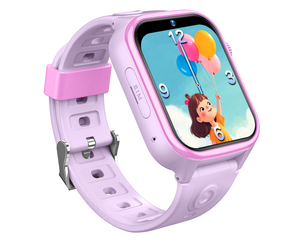
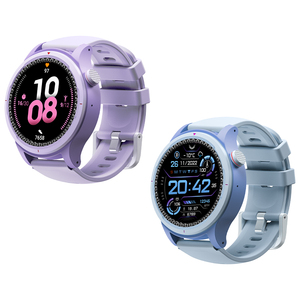
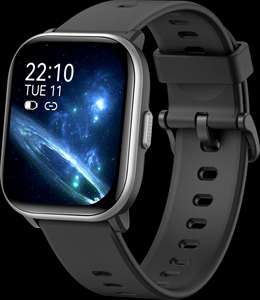
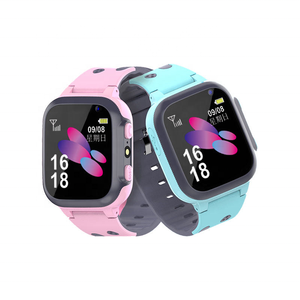
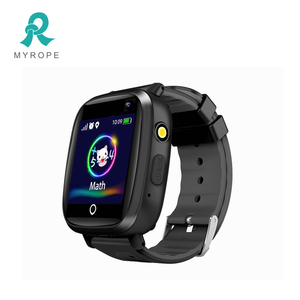
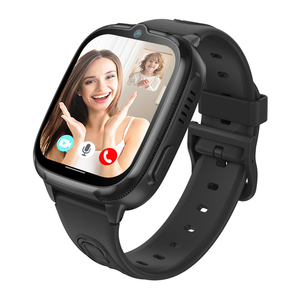
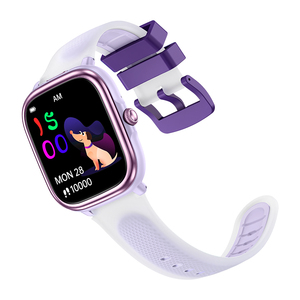
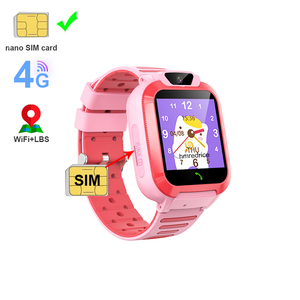
The global wearable device landscape for children has undergone a fundamental paradigm shift. China’s manufacturing ecosystem—centered in the Pearl River Delta hub of Shenzhen and Dongguan—has evolved from simple contract assembly into sophisticated OEM/ODM engineering powerhouses. For global telecom operators, consumer electronics brands, hardware distributors, and institutional buyers, procuring from top-tier Chinese manufacturers is no longer merely a cost-reduction tactic; it is a strategic imperative to leverage cutting-edge RF hardware integration, custom firmware security architecture, and rapid prototyping capabilities.
As parental demand pivots toward smartphone alternatives that offer secure voice/video connectivity without the addictive pitfalls of open internet access or social media feeds, leading OEMs are deploying customized hardware-software stacks. These include geo-location algorithms (combining GPS, AGPS, LBS, Wi-Fi triangulation, and BLE beacons), encrypted parent-child communication channels, and automated school focus modes.
Evaluating a primary kids smartwatch factory requires deep scrutiny of their manufacturing footprint, quality control protocols, and vertical integration depth. Top-tier Chinese facilities operate state-of-the-art surface-mount technology (SMT) cleanrooms, automated optical inspection (AOI) lines, and specialized RF testing chambers.
High-speed Yamaha and Fuji SMT lines capable of placing 0201 component sizes, multi-layer rigid-flex PCBs, and micro-BGA packages required for compact, kid-friendly wrist form factors.
100% automated vacuum and positive-pressure testing to guarantee IP67 and IP68 dust/water ingress compliance across mass production runs, preventing field returns due to water damage.
Integrated OTA (Over-The-Air) testing chambers to calibrate 4G LTE frequency bands (B1/B3/B7/B8/B20 for Europe; B2/B4/B5/B12/B66 for North America) ensuring peak antenna gain and minimal SAR values.
A resilient kids smartwatch relies heavily on the synergy between low-power chipsets (such as UNISOC 8521E/8541E or MediaTek platforms) and proprietary cloud operating systems. Premier OEM suppliers provide white-label software development kits (SDKs) and open Application Programming Interfaces (APIs) for seamless onboarding into enterprise parent-monitoring applications like Cosmo’s Mission Control platform.
| Architecture Component | Legacy Sourcing Baseline | 2026 Enterprise Sourcing Standard | Strategic Advantage |
|---|---|---|---|
| Cellular Modem | 2G / 3G Quad-band GSM | 4G LTE Cat-1 / Cat-4 with VoLTE & eSIM support | Future-proof against carrier network sunsets; crystal-clear audio calls. |
| Location Engine | Single-channel GPS + LBS | Multi-constellation GPS/GLONASS/Galileo + Wi-Fi Positioning | Sub-5 meter outdoor precision; high-accuracy indoor tracking. |
| Child Safety Stack | Open Call Reception | Closed Whitelist + AI Unknown Call Rejection | Blocks spam, robocalls, and unsanctioned third-party contact completely. |
| Focus Controls | Manual Alarm Schedules | School-Fi Geofence Focus + Automated Campus Mute | Complies with strict elementary/middle school classroom device policies. |
| Data Privacy | Unencrypted HTTP Server Sync | TLS 1.3 Encryption + COPPA / GDPR Server Hosting | Protects child biometric and location data against cyber interception. |
Procurement directors and product managers evaluating suppliers must align their roadmap with critical upcoming trends shaping the wearable technology market for children:
Physical SIM card slots introduce vulnerabilities to moisture, dust, and physical tamper by children. Sourcing is rapidly shifting toward integrated eSIM chips and push-push waterproof tray architectures. eSIM enables over-the-air carrier profile provisioning, simplifying international roaming and reducing carrier onboarding friction for distributors.
Traditional static time-of-day blocks fail when school timetables shift or during field trips. The next generation of Chinese hardware incorporates campus-level Wi-Fi SSID identification and geo-spatial boundary sensing (School-Fi technology). Upon crossing the campus perimeter, non-essential functions (games, media playback, camera) automatically lock down, keeping only emergency SOS and passive tracking active.
Institutional buyers and wellness-focused brands are demanding integrated PPG optical sensors for continuous heart-rate variability, skin temperature tracking, and ambient noise monitoring. Advanced algorithms differentiate between high-intensity play activity and acute physical distress, sending proactive alerts to parental dashboards.
Regulatory frameworks such as EU REACH and California Proposition 65 mandate strict non-toxicity in products designed for children. Top factories are utilizing hypoallergenic, food-grade liquid silicone rubber (LSR) straps, anti-microbial chassis coatings, and shatter-resistant curved tempered glass screen guards.
Selecting the right OEM/ODM manufacturing partner provides significant competitive moats in speed-to-market, cost structure optimization, and supply chain transparency:
From industrial design (ID) rendering and structural tooling to PCB layout, custom boot animation, localized UI packaging, and specialized accessory bundles (Launchpad magnetic charging docks, screen shields, custom bands).
Direct factory assistance with CE, FCC, RoHS, REACH, UN38.3 battery transport safety certification, and local carrier network lab approvals, drastically reducing compliance risk and import delays.
Essential guidance for supply chain managers, brand owners, and wholesale importers evaluating kids smartwatch suppliers in China.
Partner with China’s premier kids smartwatch manufacturer. Request detailed technical spec sheets, factory audit reports, product samples, or wholesale volume quotations today.
