Top China 4G Smartwatch Factories & Manufacturing Industry Guide
An authoritative technical evaluation of Shenzhen & Dongguan hardware hubs, chipset architectures, OEM customization, and RF quality compliance for B2B importers.
Curated Factory Solutions
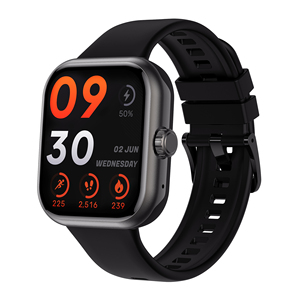
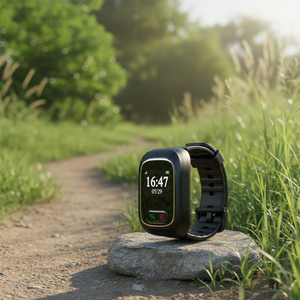
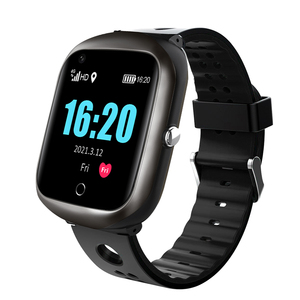
High-Performance 4G Smartwatch OEM/ODM Products
Featured standalone cellular wearables from top-tier Chinese manufacturing lines. Fully customizable for telecom operators, brand owners, and IoT safety programs.
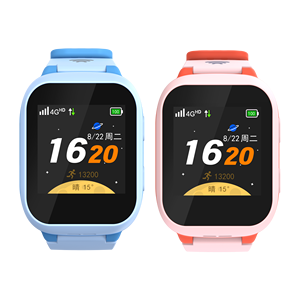
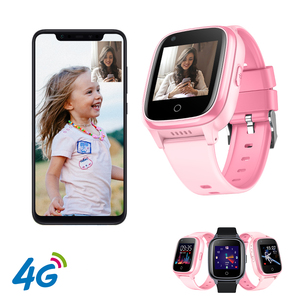
Factory Ultralight GPS 4G Tracker Sport Monitoring Touch Screen Whitelist App Control SOS Call Student Smart Watch with SIM
The global demand for standalone cellular wearables—spanning kids' safety watches, senior telehealth monitoring devices, and lone-worker IoT terminals—has triggered a structural transformation across electronics manufacturing supply chains. Greater China, specifically the Pearl River Delta hub covering Shenzhen, Dongguan, and Huizhou, controls over 92% of the worldwide OEM/ODM production output for 4G LTE smartwatches. As global telecom operators sunset 2G/3G legacy networks, procurement officers, brand owners, and system integrators face escalating complexity when navigating vendor selection, hardware reliability, regional cellular band compliance, and cloud software security.
Sourcing smart wearables from China requires moving beyond simple per-unit pricing comparisons. High-performing OEM/ODM partnerships depend on evaluating chip-level integration (such as Unisoc vs. Qualcomm SOC platforms), antenna RF sensitivity inside compact enclosures, firmware defense against illegal zero-day phone call spoofing, and total battery efficiency under active GPS tracking. This industry whitepaper delivers actionable technical criteria, auditing guidelines, and sourcing strategies derived from tier-1 electronics manufacturing operations to assist enterprise buyers in establishing robust supply alliances.
Information Gain Insight: Selecting a 4G smartwatch factory is not just a hardware packaging exercise. The real total cost of ownership (TCO) lies in OTA firmware stability, SAR compliance, PTCRB carrier certification, and zero-scrape network security protocols. A $2 upfront BOM saving on low-tier PCBA componentry frequently leads to 15-20% field-return rates due to thermal throttling and battery degradation.
Chipset & SMT Precision
Tier-1 factories utilize 10-layer ultra-dense PCBAs paired with Unisoc 8521E/8541E or Qualcomm Wear platforms, achieving low heat dissipation during VoLTE video calls.
Halo Multi-Constellation GPS
Integration of AGPS, LBS cellular triangulation, Wi-Fi MAC scanning, and Beidou/GLONASS satellite positioning ensures sub-5 meter location precision indoors and outdoors.
Closed Security & School-Fi
Proprietary RTOS or whitelisted Android environments prevent unauthorized web browsing, blocking 1.8M+ unapproved call attempts while enforcing campus geo-fencing rules.
2. Core Technical Hardware & System Architecture Breakdown
Understanding the internal engineering architecture of a modern 4G smartwatch enables procurement executives to audit factory spec sheets with high precision. Unlike basic Bluetooth sports bands, a 4G LTE smartwatch is essentially a micro-miniaturized mobile phone constrained by ultra-small thermal envelopes, battery capacities (ranging from 450mAh to 900mAh), and complex RF antenna arrangements.
2.1 Cellular Baseband & SoC Processing Units
The primary cost driver and performance baseline of any cellular smartwatch is its System on Chip (SoC). Top-tier Chinese manufacturers select chipsets based on targeted market segments and software complexity:
Unisoc 8521E / 8541E (Android-based): The dominant workhorse for midrange to premium kids' and senior smartwatches. It supports 4G Cat-4 / Cat-1 networks, dual-camera video calling, dynamic UI transitions, and custom APK execution (such as localized map APIs or biometric sync).
ASR Microelectronics (RTOS Platforms): Engineered for low-power consumption and extended battery standby. Operating on light RTOS kernel stacks, ASR-powered 4G watches excel in basic SOS trackers, lone-worker wearables, and cost-sensitive enterprise deployments requiring up to 48-72 hours of operational endurance.
Qualcomm Wear Series (Snapdragon 4100+ / Wear 5100): Reserved for flagship consumer smartwatches. While delivering ultra-smooth graphics andWear OS compatibility, Qualcomm platforms involve significantly higher NRE (Non-Recurring Engineering) licensing fees and elevated per-unit BOM expenses.
2.2 Multi-Band Radio Frequency (RF) & Antenna Architecture
Cellular connectivity in a wearable wrist package faces severe physical challenges due to human body ground-plane interference (which can attenuate signal strength by 3dB to 6dB). Leading OEM factories deploy Laser Direct Structuring (LDS) or Flexible Printed Circuit (FPC) antenna designs integrated directly into the watch casing frame.
To ensure seamless global roamability, buyers must verify carrier band compatibility across destination markets:
Target Region
Supported 4G LTE Bands
Supported 3G/2G Bands
Critical Regulatory Certifications
North America (US / Canada)
B2, B4, B5, B12, B13, B14, B66, B71
WCDMA B2/B5 (Legacy)
FCC Part 15/22/24, PTCRB, AT&T/T-Mobile Carrier Approval
The smart wearable hardware industry is undergoing rapid technological updates. Enterprise procurement managers who align their supply chain orders with emerging technologies gain distinct market positioning and avoid premature product obsolescence.
3.1 Migration to LTE-M, NB-IoT, and 5G RedCap
While standard 4G LTE Cat-1 remains the market standard for voice-enabled smartwatches, factories are actively transitioning next-generation product lines to 5G RedCap (Reduced Capability). 5G RedCap reduces baseband complexity, decreases power consumption by 20-30% compared to standard 4G LTE Cat-4, and lowers latency while retaining full compatibility with 5G standalone networks worldwide. For pure tracking wearables without high-definition video requirements, LTE-M (eMTC) modules offer superior building penetration and extended battery lifespans.
3.2 AI-on-Edge & Predictive Health Biometrics
Modern senior safety watches and lone-worker wearables are integrating localized AI algorithm models directly into MCU/DSP co-processors. Rather than relying entirely on cloud processing, Edge-AI enables real-time fall detection analysis, heart rate anomaly detection (AFib detection), and automated SOS triggers. Local processing ensures instant emergency alerts even during transient cellular disconnections.
3.3 Closed Ecosystems & Remote Enterprise MDM
Data privacy regulations (GDPR, COPPA, and CCPA) have driven a move away from open Android smartwatches toward closed, heavily containerized operating systems. Enterprise buyers increasingly request white-label Mobile Device Management (MDM) portals. These cloud platforms allow system administrators to push firmware updates OTA (Over-The-Air), restrict unauthorized app installation, control contact white-lists remotely, and establish automated campus geofencing ("School-Fi" modes) across thousands of active devices simultaneously.
Distinguishing top-tier tier-1 manufacturing facilities from low-end assembly operations requires a structured auditing methodology. When auditing a China-based 4G smartwatch factory, procurement teams should evaluate four primary manufacturing checkpoints:
1. SMT & Optical Inspection (AOI)
Verify whether the factory owns high-precision surface mount technology lines (e.g., Yamaha, Panasonic, Fuji) capable of 0201 component placement and conducts 100% Automated Optical Inspection (AOI) on all raw PCBAs before final assembly.
2. OTA Anchoic Chamber RF Testing
Insist on viewing full Total Radiated Power (TRP) and Total Isotropic Sensitivity (TIS) test reports conducted inside calibrated darkrooms. Poor RF tuning results in dropped voice calls, battery drain in low-signal areas, and high failure rates.
3. IP67 / IP68 Ingress Testing
Inspect the water resistance testing line. Premium manufacturers subject 100% of production units to air-pressure vacuum leak testing, followed by sample immersion testing in calibrated water tanks to guarantee true IP68 waterproof ratings.
4. Battery Aging & Safety Rigor
Lithium-polymer cells must carry UN38.3, MSDS, and IEC 62133 certifications. Audit the aging room to confirm that assembled smartwatches undergo minimum 2-cycle full charge/discharge aging tests under thermal stress.
5. Frequently Asked Procurement Questions (FAQ)
Below are critical technical and operational questions frequently raised by global buyers during contract negotiations with Chinese smartwatch manufacturing partners.
What is the typical Minimum Order Quantity (MOQ) for custom OEM orders?
Standard factory MOQs for existing housing with custom logo printing and silk-screening begin at 500 to 1,000 units. For deep firmware customization (custom boot animations, embedded API endpoints, localized apps), MOQs are typically 2,000 to 3,000 units. Fully custom ID/MD tooling designs start at 5,000 to 10,000 units.
How do factories handle carrier certification (PTCRB, GCF, AT&T)?
Tier-1 manufacturers supply pre-certified core modules (such as Quectel, Fibocom, or Unisoc reference designs) that hold modular PTCRB and FCC approvals. When customized into a final end-device casing, full-system testing is required. Leading suppliers assist with lab testing, submitting sample units directly to accredited labs (SGS, TUV, Element).
Can the factory supply custom parent companion apps and server backends?
Yes. OEM factories provide white-label Android/iOS companion apps along with ready-to-deploy cloud backend architecture (AWS/Azure compatible). Alternatively, for buyers with proprietary servers, factories supply open API protocols, TCP/UDP socket communication documentation, and SDKs to integrate watch telemetry straight into your cloud system.
What is the standard production cycle and lead time?
For standard OEM orders using existing component stock, lead times range between 25 to 35 calendar days after sample sign-off and deposit receipt. For new ODM products involving custom plastic injection tooling and PCB layout engineering, prototyping requires 45 days, followed by 30 days for mass production setup.
6. Strategic Sourcing Summary & Next Steps
Building a successful cellular wearable brand or enterprise safety platform requires selecting an engineering-led manufacturing partner capable of supporting product lifecycles end-to-end. By prioritizing RF performance, stringent battery safety standards, closed OS security protocols, and verifiable factory audit workflows, global importers can establish scalable, high-margin product portfolios.
Connect Directly with Our OEM/ODM Engineering Team
Request comprehensive product datasheets, factory audit reports, RF test charts, and custom tooling cost estimates tailored to your targeted region and volume requirements.