Explore our turnkey fleet of carrier-certified, GPS-enabled kids' phone watches. Each unit features custom PCBA layout options, secure firmware sandboxing, and white-label branding readiness.
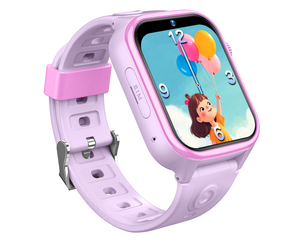
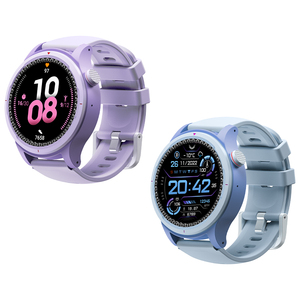
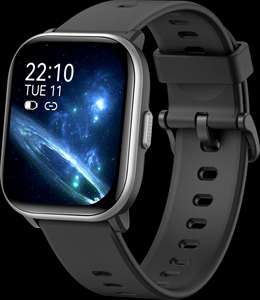
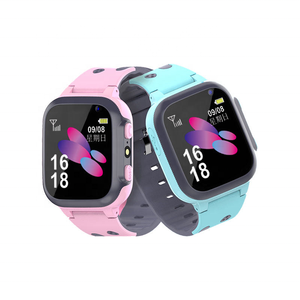
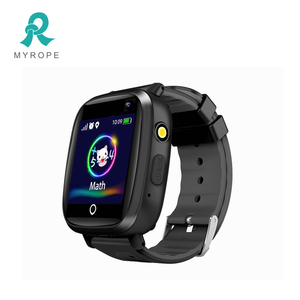
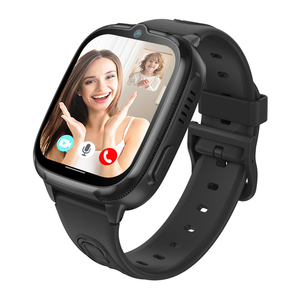
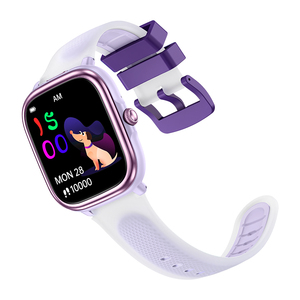
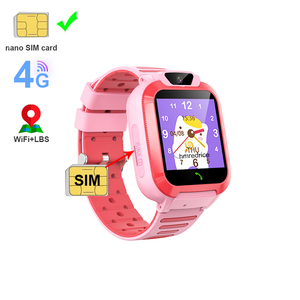
Comprehensive Sourcing Report for Brand Owners, MNO Telecommunication Operators, and Global Wholesale Buyers.
The global market for children’s smart wearables is experiencing a profound paradigm shift. Where early iterations were treated as novelty gadgetry, modern procurement managers and brand executives now evaluate kids' phone watches as mission-critical communication and safety devices. Consumer demand is overwhelmingly pivoting away from full-featured, unrestrained smartphones toward purpose-built, secure cellular wearables that offer robust parental connectivity without exposing children to open web browsing, predatory social media algorithms, or digital addiction.
As an established OEM/ODM Kids Phone Manufacturer & Factory, our facility bridges the critical gap between U.S.-led human-centric hardware UX engineering and high-throughput, precision SMT (Surface Mount Technology) electronics manufacturing. Drawing upon data gathered from managing massive global smartwatch deployments—such as our collaborative engineering with Denver-based family technology leader Cosmo Technologies, Inc.—this whitepaper delineates the structural procurement trends, hardware advancements, regulatory compliance obligations, and factory capabilities defining the market through 2030.
Institutional buyers, mobile network operators (MNOs), and consumer electronics brands must realign their OEM component specifications to match shifting regulatory and user requirements. Sourcing executives are advised to prioritize four critical operational vectors:
Regulatory frameworks such as COPPA 2.0 (USA), GDPR-K (EU), and regional child safety mandates require zero background data collection, hard-coded sandbox security environments, and complete isolation from open app ecosystems.
Modern procurement demands sub-5 meter location precision. OEM motherboards must integrate multi-constellation GNSS (GPS, GLONASS, Galileo) combined with localized Wi-Fi RSSI triangulation for seamless indoor/outdoor tracking.
Move beyond manual timer schedules. Advanced OEM devices now feature campus-aware geo-location logic (such as Cosmo’s proprietary School-Fi platform) that silences non-essential notifications upon entering school boundaries while keeping emergency SOS channels active.
The core engineering benchmark of a top-tier ODM factory lies in balancing power consumption, thermal management, and RF antenna efficiency within a tiny wrist-worn form factor. The current state-of-the-art technological stack includes:
| Hardware Subsystem | Legacy OEM Standards (2020-2023) | Modern ODM Factory Standard (2026+) | B2B Sourcing Value Proposition |
|---|---|---|---|
| SoC Chipset & OS | Single-core 2G/3G MTK chips / Heavy Android OS | Low-power Ultra 4G VoLTE / Optimized RTOS platform | Decreases power draw by 45%, eliminating thermal throttling risk. |
| Location Engine | Basic GPS + Single LBS Cell Tower mapping | Multi-channel Dual GPS + Wi-Fi Positioning + Indoor LBS | Guarantees pinpoint location history across urban high-rise zones. |
| SIM Integration | Physical Micro-SIM tray (Water-ingress prone) | Water-sealed Nano-SIM or Integrated eSIM modules | Achieves true IP68 submersible rating and structural durability. |
| Battery Tech | 400mAh Standard Cobalt / Micro-USB Port | 700mAh-900mAh Silicon-Anode / Magnetic Fast Charge | Delivers 24–48 hours of continuous operational duty cycle. |
| Security Protocol | Cleartext HTTP data transmission to generic servers | TLS 1.3 Encryption / AWS & Azure Cloud compliance | Ensures full compliance with international child safety standards. |
We combine cutting-edge hardware design, stringent quality control, and scalable manufacturing capabilities to help brands rapidly take connected wearables from concept to high-volume commercial production.
From initial ID/MD industrial design drawings and tooling mold fabrication to PCB layout modifications, custom Android/RTOS firmware compiling, and bespoke retail box design, we provide complete end-to-end OEM/ODM services.
Our manufacturing facility operates under ISO 9001 and ISO 14001 certified management systems. Every product batch undergoes rigorous testing including SAR radio frequency exposure compliance, IP68 water immersion validation, drop testing, and thermal stress cycles.
Our RF engineering team ensures hardware compatibility across global LTE spectrum bands (B1/B3/B7/B8/B20 for Europe/Asia; B2/B4/B5/B12/B13/B66/B71 for North America), enabling seamless device onboarding with major carriers worldwide.
Building upon the success of family technology brands like Cosmo Technologies, Inc. (headquartered in Denver, Colorado), our factory implements real-time field data feedback into every manufacturing iteration. By analyzing aggregate fleet metrics—including blocking over 1.8 million unauthorized spam calls monthly and maintaining continuous firmware delivery—we ensure our OEM hardware platforms set the industry standard for security, longevity, and low aftermarket RMA rates.
Essential answers for procurement directors, brand managers, and hardware distribution partners evaluating OEM/ODM manufacturing terms.
For standard white-label OEM orders (using existing tooling with customized logo branding, customized startup boot animations, and custom packaging), our starting MOQ is 1,000 units per SKU. For full ODM customization requiring custom mold design, proprietary PCBA layouts, or tailored housing materials, the typical MOQ is 3,000 to 5,000 units, aligned with chip procurement thresholds.
Our standard PCB models are pre-certified for CE (Europe) and FCC (USA) regulatory standards. When a client requires carrier-specific certification (such as PTCRB, AT&T, or T-Mobile approval), our in-house RF engineering lab provides full testing documentation, lab samples, and direct engineering support to expedite final regional approvals.
Yes. We offer open communication APIs, MQTT/HTTP transport protocols, and hardware SDK integration manuals. Your software team can easily connect our smartwatch telemetry (GPS data points, SOS triggers, biometric inputs) directly to your secure cloud backend and custom mobile apps (iOS & Android).
Every manufactured batch undergoes 100% automated pressure testing for IP67/IP68 water resistance. Our quality control protocol includes 1.2-meter drop testing onto hard surfaces, 5,000-cycle button press stress testing, thermal chamber cycles (-20°C to +60°C), and automated optical inspection (AOI) for all SMT component lines.
Standard white-label prototype samples are delivered within 5 to 7 business days. Custom ODM hardware prototypes require 25 to 35 days depending on tooling complexity. Once final golden samples are approved, mass production lead times typically range between 30 and 40 calendar days.
Ready to launch your brand's next-generation child safety wearable? Contact our engineering and procurement team today for factory-direct price sheets, complete technical datasheets, and sample evaluation units.
