Direct-from-factory IoT hardware engineered for healthcare systems, enterprise asset tracking, senior care, and personnel safety.

Ultra-thin, waterproof PET printable RFID tracking tags designed for high-density inventory audits, wristband integration, and luxury item security.
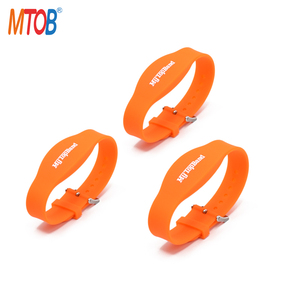
Ergonomic, high-durability food-grade silicone wristband featuring a 4K EEPROM chip for secure access control, cashless payments, and event tracking.
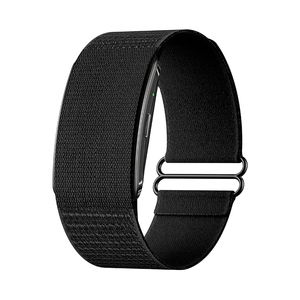
Advanced commercial health bracelet incorporating PPG optical heart rate monitoring, continuous skin temperature measurement, and sleep analytics.
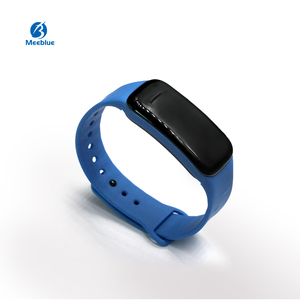
Industrial BLE 5.0 beacon bracelet with haptic vibration alerts, 70-meter signal broadcast radius, and customizable firmware for workplace safety.
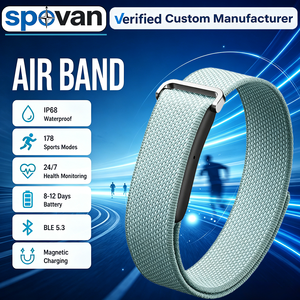
Distraction-free screenless health monitoring wristband engineered for long battery life, corporate wellness projects, and third-party app integration.
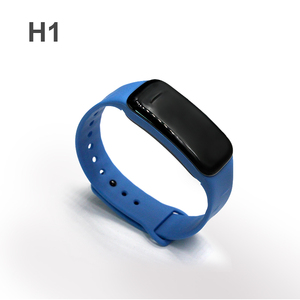
Smart wearable beacon featuring a 3-axis accelerometer for human motion tracking, worker panic signaling, and facility-wide RTLS deployment.
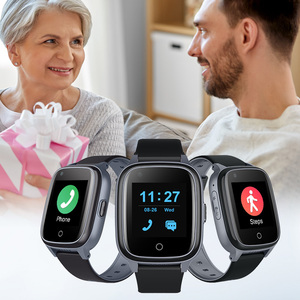
Standalone cellular safety watch equipped with real-time GPS/Wi-Fi positioning, automated fall recognition algorithms, bi-directional calling, and SOS panic triggers.
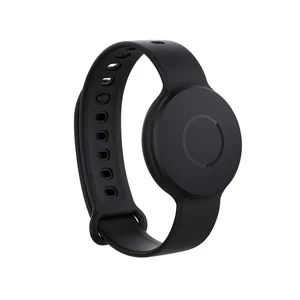
High-precision proximity beacon bracelet built for industrial site management, hospital patient monitoring, and venue attendance tracking.
The global market for smart tracking bracelets and location-aware wearables is undergoing a massive architectural transformation. Driven by rapid advancements in cellular IoT standards (such as NB-IoT and LTE Cat-M1), ultra-low-power Bluetooth Low Energy (BLE 5.3+), and high-frequency RFID ICs, modern tracking wristbands are no longer simple step counters. They have evolved into critical nodes within enterprise Real-Time Location Systems (RTLS), institutional senior care ecosystems, school safety platforms, and industrial supply chain monitoring networks.
Information Gain Insight: Modern enterprise purchasing departments must evaluate wholesale tracking bracelets across three core technical layers: Hardware Sensor Density (PPG, 3-Axis Accelerometer, GPS module), Firmware Architecture (Open SDK, OTA update stability, battery optimization), and Data Security (AES-128/256 encryption, GDPR compliance, cloud API interoperability).
As a leading manufacturing hub and export origin, China’s wearable technology hardware ecosystem in Shenzhen and Dongguan provides unprecedented scale, rapid prototyping, and vertical supply chain integration. By combining domestic chip packaging expertise with state-of-the-art automated SMT production lines, Chinese OEM/ODM suppliers deliver cost-effective, enterprise-ready tracking bracelets that conform strictly to international standards including FCC, CE, RoHS, and ISO9001.
To optimize capital allocation and operational performance, commercial buyers must select the correct tracking technology based on range, update frequency, power budget, and infrastructure costs:
| Tracking Technology | Primary Hardware Architecture | Coverage Radius | Battery Operational Lifespan | Target B2B Application Use-Cases |
|---|---|---|---|---|
| Passive RFID (UHF/HF) | Etched antenna + PET substrate + IC chip (e.g., MIFARE, Alien H3) | 0.1m to 12m (Requires external RFID Reader) | Infinite (Passive RF harvesting, battery-free) | Jewelry audit, event access control, laundry management, high-volume inventory. |
| BLE Active Beacons | Nordic / Dialog BLE 5.0+ Chipset + Coin Cell or Li-Po Battery | 10m to 100m (Gateway positioning) | 6 Months to 3 Years (Configurable TX interval) | Hospital patient workflow, warehouse asset tracking, construction site personnel safety. |
| 4G LTE / GPS Wearables | Quectel/SIMCom Module + U-blox GPS + PPG Sensor + SIM Card | Global Cellular Networks (Unlimited range) | 24 Hours to 7 Days (Rechargeable Li-ion) | Senior fall detection, child campus safety smartwatches, lone worker panic monitoring. |
Anticipating engineering milestones, regulatory pivots, and material science innovations shaping global supply chains over the next decade.
The phase-out of 2G/3G networks worldwide has driven 4G LTE Cat-1 bis and NB-IoT to become the baseline standard for standalone tracking bracelets. Procurement teams are moving away from physical nano-SIM slots toward soldered eSIM (MFF2) technology. eSIM reduces hardware dimensions, eliminates ingress points for water (achieving IP68/IP69K sealing), and allows over-the-air (OTA) provisioning across multi-country telecom carriers—drastically reducing international roaming overheads for exporters.
Next-generation senior safety wristbands, such as the D32 platform, are integrating low-power edge microcontrollers running tinyML fall detection algorithms. By processing raw data from 6-axis IMU sensors (accelerometer + gyroscope) locally on the wristband, false positives caused by daily activities (such as sitting down quickly or clapping) are reduced by over 92%. Real-time alerting occurs in milliseconds without relying solely on cloud server processing speed.
Commercial tracking bracelets are increasingly blurring the line between security wearables and medical monitoring tools. Modern procurement contracts stipulate the inclusion of multi-wavelength optical PPG sensors capable of tracking continuous heart rate variability (HRV), pulse oximetry (SpO2), and precision NTC thermistors for continuous skin temperature logging. This data is structured to integrate seamlessly into hospital EHR systems via HL7 FHIR protocols.
Institutional deployment across schools and care facilities requires zero-distraction device management. Innovations like "School-Fi" technology dynamically toggle the device functionality based on GPS boundaries rather than static schedules. When a student enters a registered school campus, non-essential interface elements automatically lock down, while emergency contact mechanisms and real-time location streaming remain continuously active.
Global regulatory bodies and enterprise buying mandates (such as EU ESG compliance directives) require tracking wristbands to adhere to strict circular economy principles. Leading Chinese exporters are replacing crude TPU plastics with bio-compatible liquid silicone rubber (LSR), ocean-recycled plastics, and halogen-free PC-ABS enclosures. Furthermore, solder alloys have transitioned fully to Lead-Free RoHS-compliant Sn-Ag-Cu compositions.
Corporate buyers no longer accept locked, proprietary cloud dashboards. Sourcing requirements now mandate open Android/iOS SDKs, standard REST APIs, and MQTT protocol support directly at the firmware layer. Hardware must push raw telemetry packets (NMEA GPS sentences, hex sensor strings, battery state) to any designated private enterprise cloud architecture (AWS IoT Core, Azure IoT Hub, or private on-premise servers).
Bridging North American family technology product design with China’s unmatched high-volume hardware fabrication speed.
Our dedicated engineering center in Denver, Colorado co-develops software architectures with hardware SMT engineers in China. We publish continuous OTA firmware updates, maintain zero-backdoor secure socket layers, and offer customized white-label parent control dashboards.
Our enterprise cellular wristbands feature strict whitelist hardware firewalling. Unapproved telephone numbers, automated robot callers, and malicious SMS packets are blocked directly at the modem baseband level—blocking over 1.8M unauthorized contact attempts per month across our active deployment base.
From initial ID design, tooling construction, and PCB layout modification to custom laser etching, customized UI launcher skins, and tailored packaging boxes—we support end-to-end B2B customized branding with low MOQ entry barriers.
Every production batch undergoes 100% automated optical inspection (AOI), RF spectrum analyzer tuning, ultrasonic water immersion testing (IP68 verified), drop test simulations, and climate aging chamber stress testing. Full CE, FCC, RoHS, and REACH documentation is provided with every shipment.
Clear, definitive answers designed for enterprise procurement officers, brand managers, and B2B hardware importers.
