Engineered for global importers, telecommunications carriers, and OEM brand distributors requiring compliant, multi-positioning emergency wearables.
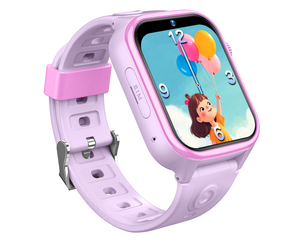
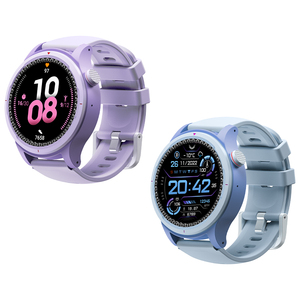
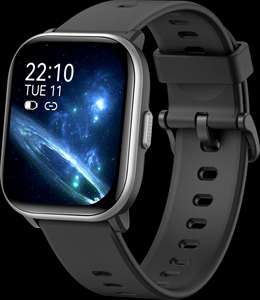
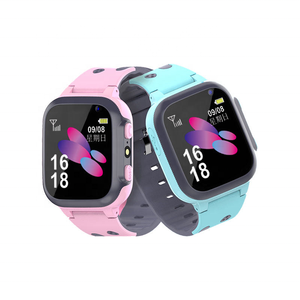
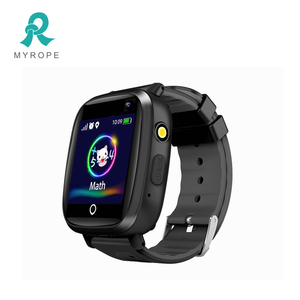
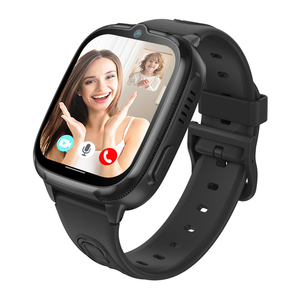
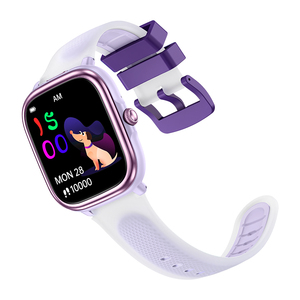
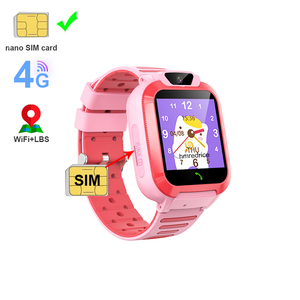
An authoritative breakdown of hardware miniaturization, sensor fusion, cellular migration, and cybersecurity mandates defining the smart watch OEM landscape.
Legacy 2G and 3G cellular network sunsetting across North America, Europe, and Asia-Pacific has accelerated the wholesale market's shift toward high-efficiency 4G LTE Cat-1, LTE-M (eMTC), and emerging 5G RedCap (Reduced Capability) chipsets. Modern SOS wearables manufactured in China now integrate multi-band cellular modems supporting global spectrums (B1/B3/B7/B20 for Europe, B2/B4/B5/B12/B66 for Americas). Forward-looking OEMs are actively prototyping Non-Terrestrial Network (NTN) direct-to-satellite emergency messaging capabilities, guaranteeing SOS connectivity in zero-cellular wilderness zones.
Next-generation SOS watches are transitioning from basic emergency keypress triggers to intelligent autonomous hazard detection. By pairing high-g 6-axis accelerometers and gyroscopes with edge-AI sensor fusion algorithms, these devices can distinguish real human falls or impact collisions from daily sports movement with over 98.4% precision. Integrated PPG (Photoplethysmography) optical sensors continuously monitor sudden heart rate spikes, low blood oxygen (SpO2), or heat stroke risk, automatically triggering automated emergency voice dispatch and SMS location broadcasting to family emergency networks.
Regulatory scrutiny around children's digital privacy and senior data tracking has elevated cyber-security into a vital hardware requirement. Premium Chinese OEM factories now implement hardware-level root-of-trust, incorporating secure boot eFUSE architecture, AES-256 encrypted payload transmissions over TLS 1.3, and strict data isolation protocol. Products built for international distribution strictly exclude open internet browsers, unauthorized app installations, and unverified third-party ad networks, complying fully with EU GDPR, US COPPA, and California SB327 IoT security mandates.
How international brands, MVNO operators, and healthcare providers are restructuring supply chains and customizing hardware ecosystems.
Global buyers are moving away from off-the-shelf public model procurement toward customized modular platforms. Leading manufacturers in Shenzhen and Dongguan provide unified motherboard baseboards (utilizing low-power chips like ASR3603 or UNISOC W307) that accept interchangeable exterior tooling housings, varying screen panels (IPS vs AMOLED), and specialized sensor arrays (PPG vs temperature). This enables enterprise buyers to launch bespoke product lines within 45 days while maintaining core regulatory compliance certifications across shared underlying circuit architectures.
Hardware procurement is no longer evaluated in isolation; it is intrinsically linked to backend software capabilities. Sourcing directors demand full white-label mobile application suites (iOS/Android) paired with scalable Cloud PaaS (Platform as a Service) backend infrastructure. Factories offering RESTful APIs, Webhooks, and direct integration into centralized 911/112 emergency response call centers or eldercare management portals hold a decisive competitive advantage in high-margin enterprise procurement tenders.
Environmental regulations and consumer safety expectations are pushing manufacturers to adopt eco-conscious materials. B2B contracts increasingly specify REACH and RoHS compliant bio-based TPU plastics, recycled aluminum bezels, and hypoallergenic medical-grade liquid silicone wristbands. Durable IP68 dust-and-waterproof structural designs, high-yield battery protection circuits (UL2054 certified), and anti-corrosion gold-plated magnetic charging contacts are non-negotiable standards to prevent premature field failures.
As educational institutions globally enforce strict smartphone bans in classrooms, SOS watches are stepping in as the preferred communication alternative for parents. Sourcing trends highlight a surging demand for dynamic geofenced focus controls (such as Cosmo's proprietary School-Fi capability). Rather than relying on manual daily schedules, the watch's firmware detects campus boundary entries via Wi-Fi/LBS positioning and automatically mutes entertainment features while leaving location tracking and SOS emergency dialing continuously active.
| Evaluation Parameter | Standard Market Off-the-Shelf Watch | Enterprise OEM Industrial SOS Platform |
|---|---|---|
| Cellular & Bands | 2G/3G or Limited Single-Region 4G | ✓ Full Global 4G LTE Cat-1 / VoLTE (B1-B28/B66) |
| Location Tech | Basic LBS Cell Tower Positioning (±500m) | ✓ Hybrid GNSS (GPS L1+L5, BDS, GLONASS, Wi-Fi, LBS) (±5m) |
| Data Security | Unencrypted HTTP / Public Cloud Servers | ✓ AES-256 Encryption, TLS 1.3, GDPR/COPPA Cloud Compliant |
| Waterproof Rating | IP65 Splash Proof | ✓ Certified IP68 Submersible (1.5 meters for 30 min) |
| Battery Safety | Standard Battery Cell without PCM | ✓ Seiko Protection IC, UL2054 & UN38.3 Certified Cell |
| App Customization | Generic Third-Party App with Ads | ✓ 100% White-Label iOS/Android SDK & Private Server PaaS |
Combining Denver-based family technology engineering vision with state-of-the-art Shenzhen SMT manufacturing precision.
Our manufacturing facility spans over 12,000 square meters, operating 8 high-speed Siemens SMT assembly lines, dust-free cleanroom casing enclosures, and automated optical inspection (AOI) stations. With an annual production capacity exceeding 3.5 million units, we deliver consistent quality for tier-1 telecommunication brands and emergency hardware distributors worldwide.
Every single SOS watch batch undergoes rigorous stress tests prior to packaging: 100% vacuum air-pressure waterproof validation (IP67/IP68), 1.5-meter micro-drop durability cycles, thermal shock testing (-20°C to +70°C), ESD electrostatic immunity testing, and 10,000-cycle hardware SOS keypress fatigue evaluations.
Our in-house R&D software engineering team provides full protocol-stack tailoring. From custom boot logos, localized multi-language UI menu sets, to private MQTT/TCP server protocol integration, we empower buyers to establish complete brand identity and full cloud ecosystem independence.
Consult with our senior hardware engineers. Receive complete tech specs, engineering drawings, and bulk pricing schedules within 24 hours.
Answers to critical questions asked by importers, brand managers, and procurement officers prior to committing contract orders.
For standard unbranded factory catalog models, our trial order MOQ starts at just 100 units. For custom silk-screen branding and custom packaging boxes, the standard MOQ is 500 units. For full OEM project custom tooling, bespoke plastic mold injection, and deep firmware customization, our standard production threshold is 1,000 to 3,000 units depending on technical complexity.
We manufacture localized cellular RF module variants tailored to targeted market spectrums. We offer European/Asian variants (B1/B3/B5/B7/B8/B20/B38/B40/B41) and North American variants (B2/B4/B5/B12/B13/B17/B26/B66). Each batch undergoes network simulator protocol verification (Agilent/Rohde & Schwarz test benches) to guarantee seamless carrier activation across major telcos like AT&T, T-Mobile, Vodafone, and Orange.
All our wholesale SOS watch platforms carry comprehensive international certification packages, including CE-RED, FCC ID, RoHS, REACH, and SAR (Specific Absorption Rate) compliance testing (<1.6 W/kg limit). Battery packs are individually certified under UN38.3, MSDS, and IEC 62133 safety standards, ensuring smooth customs release and air/sea freight logistics clearance.
Yes. We offer robust API/SDK integration packages. When the physical SOS key is held down for 3 seconds, the watch hardware can transmit dual data streams: a direct voice call via GSM/VoLTE to pre-programmed numbers, alongside encrypted JSON location packets (lat/long, battery level, cellular ID) sent via HTTP POST or MQTT directly to your proprietary cloud monitoring portal or emergency call center platform.
Sample requests and standard catalog trial orders are dispatched within 3 to 5 working days. Mass production for customized OEM orders (500 to 5,000 units) typically requires 20 to 25 calendar days following golden sample sign-off and deposit confirmation. New custom mold plastic injection tooling adds approximately 30 to 35 days to the initial project schedule.
Waterproofing is guaranteed through precise structural ultrasonic welding, custom-molded silicone sealing rings, and hydrophobic acoustic membrane covers over speaker and microphone ports. During assembly, 100% of watch casings undergo automated positive and negative air-pressure vacuum chamber leak testing before circuit boards are finalized, guaranteeing IP67 or IP68 protection levels.
We provide a comprehensive 12-month factory quality warranty on all hardware components. Our manufacturing defect rate is strictly controlled below 0.35% through standardized multi-stage QC. In the event of functional hardware failure, we provide free component replacements or unit credits with subsequent container shipments, alongside dedicated engineer support for remote firmware debugging.
Absolute transparency and white-label ownership are core advantages of our supply partnership. We offer ready-to-publish companion mobile application code (iOS Objective-C/Swift & Android Java/Kotlin) tailored with your brand name, company logo, color palette, and server endpoints, allowing you to launch your own brand ecosystem on Google Play and Apple App Store effortlessly.
Gain direct access to tier-1 manufacturing prices, dedicated technical R&D engineering support, and reliable global delivery schedules.
