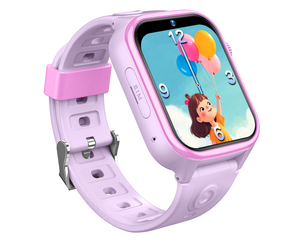
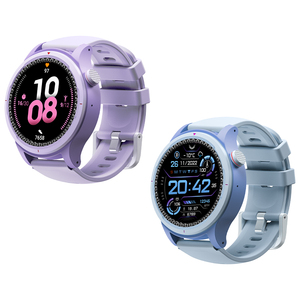
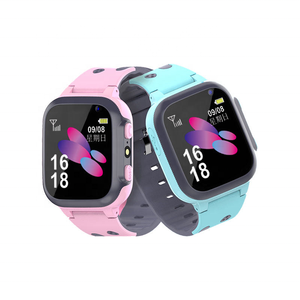
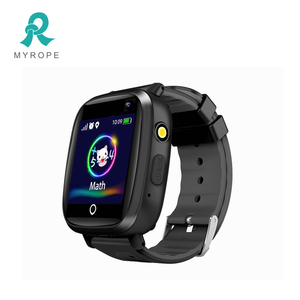
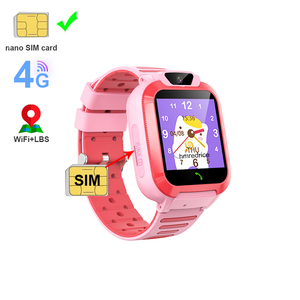
Custom OEM/ODM wearable hardware solutions engineered with full CE (RED/RoHS/REACH) and Bluetooth SIG compliance for global distribution.
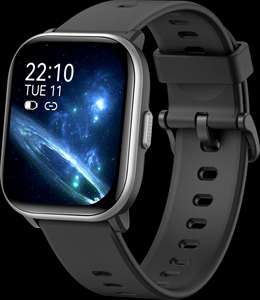
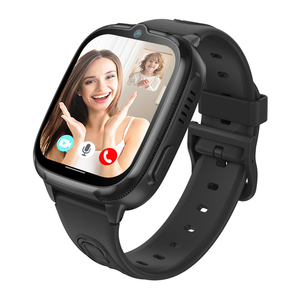
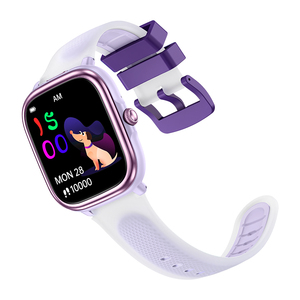
In the rapidly evolving landscape of personal IoT wearables and connected health technology, securing market access within the European Economic Area (EEA) demands absolute adherence to mandatory regulatory standards. As a premier original equipment manufacturer (OEM) and original design manufacturer (ODM), our manufacturing facilities operate under stringent quality management protocols to ensure that every CE Certified Bluetooth Smartwatch delivered from our production lines meets or exceeds the complex legal benchmarks established by European directives.
CE marking is not merely a trading badge; it represents a comprehensive statement of product safety, radio spectrum efficiency, electromagnetic compatibility (EMC), and environmental sustainability. For global brand owners, institutional importers, and retail distributors, sourcing smartwatches from an uncertified factory introduces existential supply chain risks—including customs seizures, costly market recalls, heavy administrative fines, and severe brand equity erosion. This technical whitepaper details the architectural, engineering, and testing parameters necessary to produce market-ready, fully compliant Bluetooth smartwatches.
Full compliance with Directive 2014/53/EU. We conduct rigorous RF testing under ETSI EN 300 328 for 2.4 GHz ISM band operation, verifying output power, spurious emissions, and receiver blocking performance across all operational temperatures.
Strict alignment with EN 301 489-1/-17 for electromagnetic immunity and EN 62209-2 / EN 50566 for Specific Absorption Rate (SAR) safety, ensuring localized RF exposure stays well below European regulatory limits for human body and wrist contact.
100% compliance with RoHS Directive 2011/65/EU (and amendment 2015/863) alongside REACH SVHC candidate list restrictions. Strap materials utilize skin-friendly, hypoallergenic, PFAS-free silicone and TPU formulations.
Achieving reliable Bluetooth connectivity within a compact smartwatch enclosure requires sophisticated radio frequency (RF) front-end engineering. Modern smartwatch enclosures present severe spatial constraints where the antenna must coexist alongside metallic battery cells, liquid crystal or AMOLED display drivers, optical sensors, and micro-actuators. Our R&D engineering teams utilize advanced 3D electromagnetic simulation tools (CST Studio Suite) to optimize embedded ceramic chip antennas and flexible printed circuit (FPC) antenna geometries.
By selecting tier-one silicon platforms—including Nordic Semiconductor nRF52/nRF53 series, Realtek RTL8763E BLE 5.3 SoCs, and MediaTek wearable processors—we deliver hyper-low-power consumption architectures. The integration of Bluetooth Low Energy (BLE 5.2/5.3/5.4) protocols enables extended sleep cycles, optimized connection intervals, and enhanced data throughput capabilities (2Mbps PHY and LE Coded PHY for long-range communication).
| Architecture Parameter | OEM Standard Specification | Enterprise Customization Options |
|---|---|---|
| Processor & BLE Chipset | Realtek RTL8763E / Nordic nRF52840 (BLE 5.3 / 5.2) | Dual-chip system (Main SoC + Low-power BLE Coprocessor) |
| Display Technology | 1.43" – 1.85" HD IPS / AMOLED (360x360 up to 466x466) | Corning Gorilla Glass, Oleophobic Anti-fingerprint Coating |
| Biometric Sensors | PPG Green Light Optical Heart Rate & SpO2 Sensor | Multi-channel Photoplethysmography, ECG (Single-lead) |
| Positioning & Location | GNSS Dual-Band (GPS / LBS / Wi-Fi Sniffing) | AGPS support, SafeZone Geofencing firmware triggers |
| Ingress Protection | IP67 (1m water immersion for 30 minutes) | IP68 / 5ATM Water Resistance (Hydrostatic testing) |
| Battery Chemistry | High-density Pure Cobalt Li-Polymer (300mAh - 680mAh) | Custom capacity sizing, KC/UL 1642 safety certified cell |
The global market for smart wearable devices is shifting rapidly from basic step-counting gadgets to fully autonomous, security-centric personal hubs. Brands seeking long-term commercial success must align their procurement strategies with four key micro-architectural and market developments:
Next-generation smartwatches leverage high-efficiency dual-processor topologies. A dedicated ultra-low-power MCU manages background biometric monitoring, while an application processor fires up strictly for graphic rendering, video calls, or local AI inferencing, extending battery endurance by over 40%.
Under Article 3.3 of the updated EU RED directive and the Cyber Resilience Act (CRA), upcoming smartwatches imported into Europe must feature encrypted firmware, secure boot mechanisms, and mandatory end-to-end data encryption for cloud communication to protect user privacy.
Raw sensor data processing is moving from mobile companion apps directly onto on-device Neural Processing Units (NPUs). On-chip machine learning models analyze heart-rate variability (HRV), sleep apnea indicators, and fall detection triggers with zero latency and enhanced accuracy.
Furthermore, institutional buyers in the educational and family technology sectors—such as brands deploying standalone 4G/BLE kids smartwatches—are prioritizing focus controls (e.g., geofenced campus auto-mute settings like School-Fi) and closed-loop security. Devices engineered without unmonitored web browsers or open app stores prevent childhood screen addiction while granting parents instant, reliable emergency contact channels.
As a dedicated B2B partner, our factory operates a 10,000-square-meter facility equipped with state-of-the-art High-Speed SMT (Surface Mount Technology) assembly lines, automated optical inspection (AOI) units, wireless communication test chambers, and precision IP68 waterproof test instruments.
Every smartwatch unit undergoes a mandatory 4-stage quality control process: Incoming Quality Control (IQC), In-Process Quality Control (IPQC), 100% 24-Hour Aging & Battery Cycle Test, and Final Quality Control (FQC) prior to export packaging.
We provide comprehensive SDK/API integration support for iOS and Android companion applications. Firmware can be customized with client-branded boot screens, UI theme colors, custom sports modes, and localized multi-language packs (covering 30+ languages).
Navigating Bluetooth SIG licensing can be challenging. We assist brand partners with Quick Design Identifier (QDID) assignments, streamlining BQB product listings and ensuring complete intellectual property compliance.
Expert answers regarding CE certification verification, custom OEM/ODM lead times, minimum order quantities (MOQ), and factory compliance audits.