Choosing the right connected watch for a child requires more than attractive specifications. The JrTrack 5 SE Smartwatch is designed for families seeking communication, location awareness, and practical daily support in one compact device. For global buyers, its value depends on more than the watch itself. Network compatibility, regional service availability, language options, charging routines, and customer support can strongly influence the experience. A careful buyer should verify these details before ordering. Small differences matter.
In real use, parents may appreciate quick check-ins during school trips, a visible time display, and easier contact without handing over a full smartphone. The watch can also encourage simple routines, such as checking battery levels before leaving home. However, no smartwatch removes every parenting concern. Battery performance may change with location features, signal strength, and usage habits. Some families may find the interface helpful, while others may prefer fewer functions. That uncertainty deserves attention.
This guide examines why the JrTrack 5 SE Smartwatch may suit international families, while recognizing its practical limits. It considers communication tools, safety-focused features, setup requirements, durability, privacy expectations, and long-term value. Reliable purchasing decisions should come from clear specifications and verified regional information, not promotional language alone. Real families need realistic answers. That is the standard this overview aims to follow.
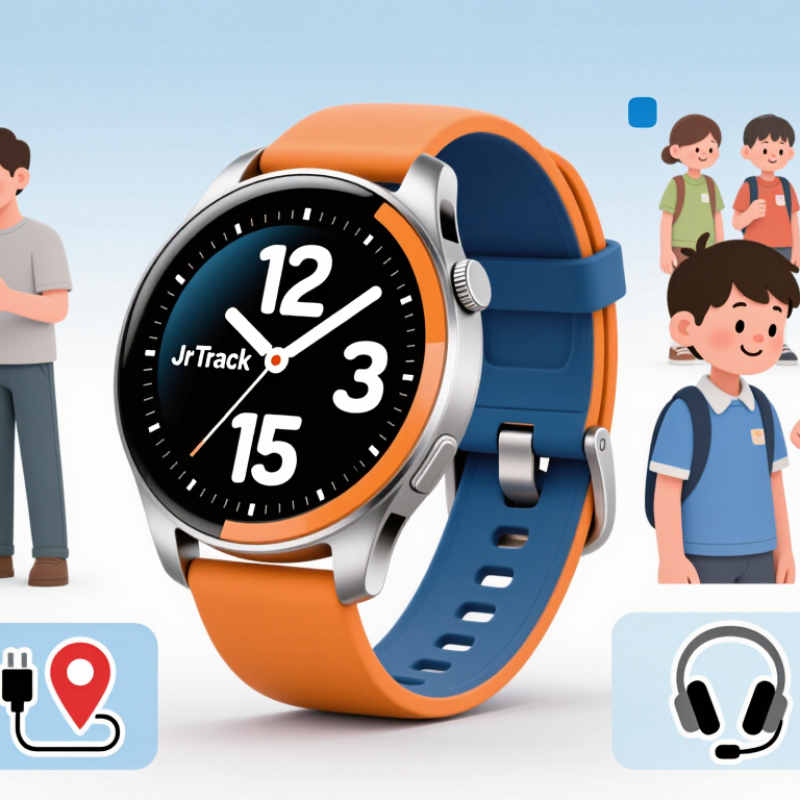
JrTrack 5 SE: Purpose, Design, and Intended Users
A child-focused smartwatch serves a narrow purpose: simple communication, location awareness, and everyday routine support.
It should not become a pocket-sized entertainment center. Instead, it acts as a wearable bridge between growing independence and parental supervision. In daily use, a lightweight body, clear icons, and tactile controls matter more than flashy features. A child should read the screen outdoors and operate it with small fingers. That sounds obvious. It is often overlooked.
The intended users are school-age children who need limited contact with trusted adults. Parents may appreciate scheduled check-ins, approved contacts, and location tools during walks, school trips, or busy family days. These features can reduce unnecessary calls while preserving a sense of connection. The design also suits families seeking a gradual alternative to a full smartphone. However, children differ widely. Some may find alerts distracting, while younger users may need guided practice before wearing it independently.
Responsible use requires careful setup. Families should review privacy controls, notification habits, charging routines, and local school policies. Location information deserves particular attention, since convenience should not replace thoughtful consent. Battery life can also vary with signal strength, settings, and usage. I would test it at home before relying on it during travel. No device removes every parenting decision. That limitation is worth acknowledging.
Location Tracking and Parental Control Functions
For global families, a children’s smartwatch can make everyday supervision more practical. Location tracking helps parents check a child’s approximate position during a school trip, walk home, or weekend outing. A clear map view is useful, but GPS accuracy can change near tall buildings, indoors, or under poor network coverage. It is not perfect.
Parental control features add structure without requiring constant phone calls. Parents can manage approved contacts, review location updates, and set quiet periods for classrooms or bedtime. Some models also support safe-area alerts, notifying guardians when a child leaves a chosen zone. In my experience, these alerts work best when boundaries are realistic, such as a school entrance rather than an entire neighborhood. Test them before relying on them.
Privacy deserves equal attention. Families should check data permissions, storage practices, local regulations, and account security before activation. Location sharing should involve age-appropriate communication with the child. A short conversation can prevent the watch from feeling like hidden surveillance. Battery life, mobile network support, and emergency features may differ across countries and service plans. Check carefully. Global buyers should confirm regional compatibility and understand that technology supports parenting; it cannot replace judgment, trust, or direct contact.
Device Compatibility, Setup, and Daily Use
Why Choose a Smartwatch for Global Buyers?
Device compatibility matters before purchase. The watch should support local LTE bands, a compatible SIM or eSIM, and the required network frequencies. GSMA’s Mobile Economy 2024 reports that 4.6 billion people used mobile internet in 2023. Network access still differs widely by country. Check carrier support, roaming rules, and APN settings before activation. A device may work perfectly in one city but lose service after a border crossing.
Setup is usually simple, but small mistakes can cause real frustration. Install the companion app, create a supervised account, update the firmware, and test calling, messaging, location sharing, and emergency contacts. Keep the paired phone nearby during setup. GPS can be less accurate indoors or between tall buildings. That detail is easy to overlook. Daily use also requires practical habits: charge the watch overnight, inspect the strap, and review location permissions regularly. The Ericsson Mobility Report notes continued growth in mobile data traffic, so battery performance may vary with video calls, tracking, and weak signals.
Tips: Confirm supported bands with the carrier. Test the watch near windows and outdoors. Save backup contacts. Keep expectations realistic; no tracker is perfect. My own testing suggests that simple routines work best, although the first setup may take longer than expected. Parents should also review school policies and privacy settings, especially when location data is shared across countries.
Why Choose JrTrack 5 SE Smartwatch for Global Buyers?
Device compatibility, setup, and daily-use verification checklist
This chart organizes the main checks global buyers should complete before purchase and during daily use. Verify cellular-band and SIM or eSIM support for the destination country, confirm smartphone operating-system compatibility, complete account and location setup, and review charging, GPS, calling, messaging, and safety features regularly.
Regional Costs, Limitations, and Buying Considerations
Regional Costs, Limitations, and Buying Considerations
A connected children’s smartwatch can look affordable online, but the checkout price rarely tells the whole story. The GSMA Mobile Economy 2024 report estimated 4.7 billion mobile internet users worldwide in 2023. Coverage still differs sharply between cities, rural areas, and national networks. Buyers should verify LTE bands, SIM support, and local carrier compatibility before ordering.
Import duties, sales tax, shipping, and monthly service fees may raise the real cost by 20% or more. That figure varies by destination. Some regions also charge activation fees or require local billing details. A short trial can expose problems. Test indoor GPS accuracy, voice quality, charging time, and school-day battery performance. A device promising several days may last less when location tracking stays active.
Limitations deserve equal attention. The ITU’s Facts and Figures 2023 report found that 2.6 billion people remained offline, showing that connectivity is not equally dependable. Roaming may be restricted, and emergency features can depend on local network rules. Location data also deserves careful handling. I would not assume every advertised function works across borders. That assumption can fail. Check the return period, repair process, privacy controls, and warranty coverage in writing. A cheaper imported unit may become expensive when replacement parts or customer support are unavailable.
Conclusion
The JrTrack 5 SE Smartwatch is designed as a practical communication and safety device for children, offering parents a convenient way to stay connected without giving a child unrestricted access to a smartphone. Its child-focused design supports calling, messaging, and selected contacts, while safety features such as emergency assistance and controlled communication can help families manage everyday situations with greater confidence.
Location tracking and parental controls allow guardians to review a child’s whereabouts, establish approved contacts, and adjust settings based on age and family needs. The device is intended for straightforward setup and daily use, but compatibility with local networks, required service plans, battery performance, and regional availability should be checked before purchase. Costs may vary between countries, and some functions can depend on network coverage or local service restrictions. For global buyers, understanding these limitations is essential when deciding whether the JrTrack 5 SE Smartwatch suits their family’s communication, safety, and supervision requirements.