Choosing among the Top China GPS Kids Phone Watch Suppliers requires more than comparing prices and colorful product images. A reliable supplier must combine stable positioning, clear voice quality, durable hardware, and responsible data protection. Parents notice small details first: a watch that lasts through a school day, an SOS button that responds quickly, and location updates that remain understandable indoors.
Market evidence supports this category’s momentum. Grand View Research reports that the global smartwatch market was valued at approximately USD 33.6 billion in 2022, with strong projected growth through 2030. IDC’s Worldwide Quarterly Wearable Device Tracker also shows continuing expansion across wearable devices, although children’s watches represent only one segment. These figures indicate opportunity, not automatic quality. Some supplier claims still need careful checking.
Industry analyst Avi Greengart has expressed a useful principle: “The best wearable technology is technology people actually use.” For a GPS Kids Phone Watch, that means simple controls, accurate geofencing, dependable calling, and sensible battery performance. Suppliers should provide real test videos, certification documents, application screenshots, and transparent information about servers and data handling. Factory experience matters, but communication after delivery matters too.
There is no perfect shortlist. Some factories offer excellent customization but limited software support. Others provide polished applications but inconsistent after-sales service. Buyers should request samples, test tracking around buildings, inspect charging contacts, and question vague claims about waterproofing. The strongest Chinese suppliers are not merely manufacturers. They are partners capable of improving safety features without turning a child’s wrist into an unnecessarily complex device.
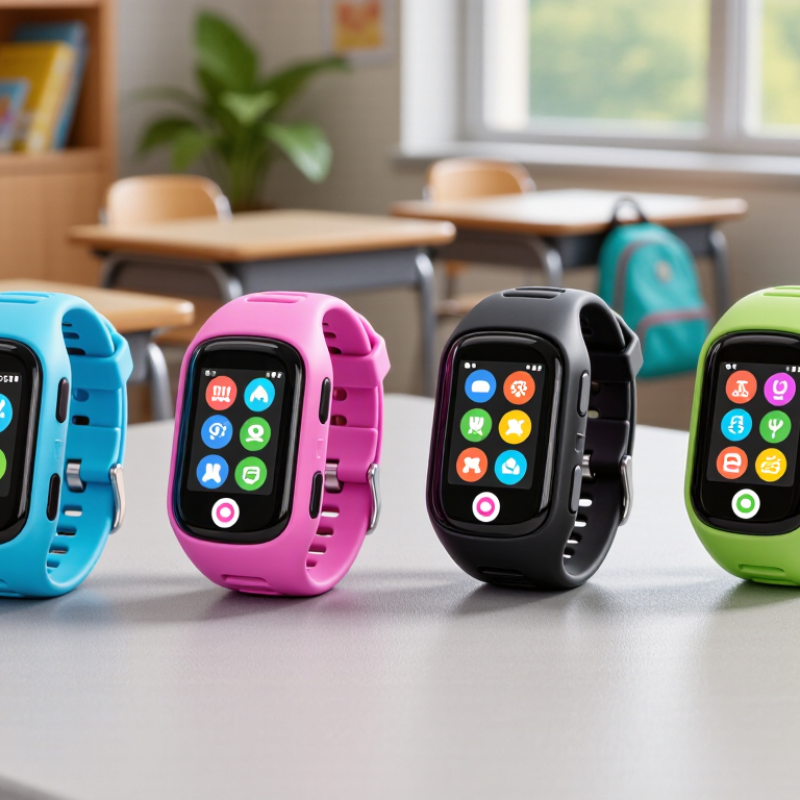
China’s cellular IoT market is moving toward exceptional scale. GSMA forecasts 5.6 billion cellular IoT connections in China by 2030. That figure matters for GPS kids’ phone watch suppliers. Larger networks can improve coverage, device availability, and component pricing. They may also increase pressure on suppliers to prove reliability.
For buyers, supplier evaluation should begin with network compatibility and field testing. A watch should maintain stable positioning near schools, apartment blocks, and crowded transport areas. Battery performance needs measurement under frequent location updates and voice calls.
Clear evidence matters. Ask for test reports, firmware update procedures, water resistance data, and repair timelines. Suppliers should also explain how they protect children’s location information and support responsible data handling.
The forecast is not a guarantee of equal service everywhere. Rural coverage, indoor signals, and network transitions can still expose weak designs. Small screens often hide important settings. Parents may also misunderstand location accuracy. It is usually approximate, not magical.
Suppliers with engineering experience should describe these limits plainly, rather than promise perfect tracking. They should offer configurable geofencing, emergency calling, contact controls, and transparent subscription terms.
Pilot testing with real families can reveal problems that laboratory results miss. That process may feel slower, but it produces more trustworthy purchasing decisions.
Top China GPS Kids Phone Watch Suppliers?
When comparing China GPS kids phone watch suppliers, buyers should examine how location data works in real use. GPS performs well outdoors, while GNSS may combine multiple satellite systems for faster positioning. In crowded streets, accuracy can drift near tall buildings. Ask for measured results, not only catalog claims. A practical test should record locations during walking, school travel, and indoor transitions. That evidence shows more than a polished specification sheet.
4G LTE supports voice calls, app communication, and faster alerts than older networks. Coverage still depends on local operators and network bands. Check SIM compatibility, roaming limits, standby time, and update intervals. SOS should be easy to press, with clear confirmation and dependable contact routing. A child may panic or press it accidentally. Suppliers should explain cancellation steps, alert history, and battery behavior during repeated emergency calls. Vague answers deserve caution.
Geofencing can notify guardians when a watch enters or leaves a defined area, such as a school gate. The feature is useful, but virtual boundaries are not physical barriers. Review radius settings, delay times, map accuracy, and notification channels. Data security also matters: request access controls, encryption details, retention periods, and software update practices. I would inspect sample units, test battery life for several days, and document failures. No device is perfect. A transparent supplier admits weak spots and explains how they are corrected.
| Anonymous Supplier Profile | Typical Product Positioning | Positioning Technologies | GPS Tracking | 4G LTE Connectivity | GNSS Support | SOS Function | Geofencing | Two-Way Calling | Typical Battery Capacity | Typical Water Resistance | Common Customization Scope |
|---|---|---|---|---|---|---|---|---|---|---|---|
| Supplier Profile 01 | Entry-level child locator watch for basic family safety tracking | GPS, Wi-Fi positioning, cellular location, LBS fallback | Yes Location updates through a companion mobile application |
4G LTE Cat 1 or LTE-M, depending on target market | GPS plus regional GNSS options; constellation support varies by module | Yes Dedicated SOS button with preset emergency contacts |
Yes Usually supports app-defined circular safe zones |
Yes Whitelist-based calling is commonly supported |
500–700 mAh | Typically IP67 | Logo, watch strap color, packaging, app language, SIM configuration |
| Supplier Profile 02 | Mid-range 4G video and voice communication watch | GPS, Wi-Fi, LBS, accelerometer-assisted positioning | Yes Real-time and scheduled location reporting |
4G LTE Cat 1 or Cat 4 with voice and data support | GPS, BeiDou, GLONASS, or Galileo combinations according to chipset | Yes Emergency call, alert message, and location sharing |
Yes Multiple zones and entry/exit notifications are commonly available |
Yes Two-way voice calling; selected models add video calling |
650–900 mAh | Typically IP67; some configurations target IP68 | Industrial design, display interface, firmware, cloud region, mobile application branding |
| Supplier Profile 03 | Compact school-age watch emphasizing low power consumption | GPS, Wi-Fi, cellular location, motion sensor | Yes Periodic tracking designed to extend standby time |
4G LTE-M or Cat 1bis where supported by the destination network | Multi-constellation GNSS is available on selected hardware versions | Yes Physical SOS key with configurable alert contacts |
Optional Available when the device cloud platform includes the feature |
Yes Voice calling normally limited to approved contacts |
450–650 mAh | Typically IP67 | Battery optimization, strap materials, charging dock, language packs, parental controls |
| Supplier Profile 04 | Feature-rich family communication watch with camera and health functions | GPS, Wi-Fi, cellular positioning, accelerometer, optional sensor suite | Yes Live tracking, historical route records, and location alerts |
4G LTE Cat 4 or Cat 1, subject to modem and regional band selection | GPS with combinations of BeiDou, GLONASS, and Galileo | Yes Dedicated SOS button, emergency dialing, and push notifications |
Yes Supports configurable safe areas and geofence alerts |
Yes Voice and video calling may be supported on camera-equipped models |
700–1,000 mAh | Typically IP67 | Camera module, user interface, cloud dashboard, OTA firmware, packaging, private-label application |
| Supplier Profile 05 | Rugged outdoor child watch for active use and travel | GPS, Wi-Fi, cellular location, accelerometer, optional compass | Yes Outdoor tracking with configurable reporting intervals |
4G LTE Cat 1, Cat 4, or region-specific LTE modem options | Multi-GNSS support is commonly available for improved outdoor acquisition | Yes Mechanical SOS key designed for quick operation |
Yes Zone entry, zone exit, and overspeed-style alerts may be configured |
Yes Voice calling through a managed contact list |
800–1,200 mAh | IP67 or IP68, depending on enclosure validation | Housing protection, strap design, regional LTE bands, localization, test requirements |
| Supplier Profile 06 | Education-oriented watch with school-mode controls | GPS, Wi-Fi, LBS, motion sensing, optional NFC hardware | Yes Location tracking can be restricted during defined school hours |
4G LTE Cat 1 or LTE-M, depending on operator compatibility | GPS and selected multi-constellation GNSS configurations | Yes Emergency contact sequence and notification support |
Yes Commonly supports home, school, and other approved areas |
Yes Approved-contact calling with optional classroom restrictions |
500–800 mAh | Typically IP67 | School-mode software, NFC access features, dashboard permissions, content localization |
| Supplier Profile 07 | Fleet-compatible child safety watch for organizations and distributors | GPS, Wi-Fi, cellular positioning, cloud API integration | Yes Scheduled, on-demand, and event-triggered location reporting |
4G LTE Cat 1 or Cat 4 with multiple regional SKU options | GPS with multi-GNSS chipset options for international deployment | Yes SOS alert can be routed to guardians or an administrator account |
Yes App and dashboard-based geofence management |
Yes Voice communication depends on SIM, cloud, and regional regulations |
600–1,000 mAh | Typically IP67 | API access, multi-tenant dashboard, device management, OTA updates, regional compliance support |
| Supplier Profile 08 | Custom-development supplier for private-label and tender projects | Selectable GNSS module, Wi-Fi, cellular positioning, optional sensors | Configurable Tracking behavior can be defined in firmware and cloud requirements |
4G LTE modem selected according to country bands, operator certification, and target cost | Configurable GPS, BeiDou, GLONASS, and Galileo combinations depend on the selected chipset |
Configurable Button, workflow, recipient list, and alert protocol can be specified |
Configurable Zone quantity, radius, alerts, and escalation rules depend on software scope |
Configurable Voice, video, or data-only operation may be specified |
450–1,200 mAh, based on enclosure and feature requirements | IP rating must be confirmed through product-level validation | Full hardware, firmware, mobile application, cloud platform, packaging, certifications, and tooling support |
Supplier type matters more than a polished product page. OEM factories usually build your design, firmware brief, packaging, and specifications. ODM suppliers offer an existing watch platform, then adjust casing, software, sensors, or languages. Brand-ready factories provide deeper support, including packaging, compliance documents, app setup, and quality-control systems.
IDC’s Worldwide Quarterly Wearable Device Tracker estimated 537 million wearable devices shipped globally in 2024. However, that figure includes many product categories, not only children’s watches. Buyers should avoid treating broad market growth as proof of supplier expertise. Request production samples, battery test records, GPS accuracy results, and app-update procedures. A reliable supplier should explain failure rates, waterproof testing, and replacement handling clearly. Vague answers are useful warnings.
Tips: Match the supplier to your launch stage. Choose OEM for strict control, ODM for faster development, and brand-ready support for retail preparation. Ask whether engineering changes are documented. One overlooked detail can delay an entire shipment. Also, verify data-security practices and regional radio approvals before signing. My practical view is imperfect but important: the cheapest factory often becomes expensive after software fixes, returns, and repeated sampling.
Top China GPS Kids Phone Watch Suppliers?
Technical verification should guide every supplier review. A watch may claim reliable tracking, yet laboratory evidence matters more than sales language. Ask for 3GPP test records covering supported LTE bands, radio performance, emergency calling, and network interoperability. Check whether the tested model matches the production version. Small hardware changes can affect antenna performance.
Review the IP rating under IEC 60529 conditions. IP67 suggests dust protection and temporary water immersion, but it does not confirm protection against soap, seawater, or repeated impacts. Battery claims also need practical testing. Measure runtime with GNSS active, cellular data enabled, regular location uploads, and screen use. A large battery number alone proves little. Record charging time, standby drain, and battery behavior after repeated cycles.
Tips: Request independent reports, raw test conditions, and samples from normal production. Test GNSS outdoors and near buildings. Compare cold-start time, position accuracy, sensitivity, and tracking stability. Real environments are messy. Indoor reflections can distort results. I would also repeat tests after a firmware update, because performance may change unexpectedly. A dependable supplier should explain failures clearly, provide corrective actions, and accept third-party verification instead of offering only polished specifications.
When comparing China GPS kids phone watch suppliers, compliance records should come before price. GSMA Intelligence forecasts global IoT connections will reach 34.4 billion by 2030. That growth increases pressure on traceability, radio safety, and after-sales control. Ask suppliers for current MIIT network access records and SRRC approvals. These documents should match the exact model, frequency bands, firmware, and manufacturer entity.
CCC evidence requires careful checking. Not every watch falls under the same compulsory category, so confirm its classification with an accredited testing body. Request test reports, not only certificate screenshots. Check laboratory accreditation, report dates, battery specifications, and the sample’s hardware version. RoHS documentation should identify restricted substances and testing methods. ISO 9001 can show process discipline, but it does not prove product safety or GPS accuracy. A factory may hold a valid certificate while changing components quietly. That risk is real.
Tips: Order production samples before signing large volumes. Compare the serial number, charging temperature, GPS fix time, emergency-call behavior, and packaging labels. Keep copies of MIIT, SRRC, CCC, ISO 9001, and RoHS files. Verify them through official or accredited channels where possible. Industry reports often measure shipment growth, not compliance quality. My field experience suggests paperwork can look complete while firmware remains unstable. Test indoors, outdoors, and near weak network coverage. Ask for corrective-action records, not polished promises.
The chart shows the general sourcing relevance of five records for GPS kids phone watches in China: MIIT network access records and SRRC radio type approval are typically central to connected devices; CCC applicability depends on the product category and current catalogue requirements; ISO 9001 is a voluntary quality-management certification; and RoHS verifies restriction of hazardous substances. The index is a compliance-screening guide, not a supplier pass/fail rating.
Larger networks may improve coverage, device availability, and component pricing. They also raise expectations for reliability. Growth is not equal service everywhere. Rural areas and indoor spaces may remain difficult.
Check supported cellular bands, SIM compatibility, roaming limits, and local operator coverage. Test the watch near schools, apartment blocks, and crowded transport areas. Do not trust a specification sheet alone. Real streets can expose weak antenna designs.
GPS uses satellite positioning, while GNSS can combine several satellite systems. GNSS may acquire positions faster in some conditions. Tall buildings can still cause location drift. Test walking routes, indoor transitions, and outdoor areas.
Check voice calls, app messages, alert speed, and network recovery. Measure performance under local network conditions. Review standby time and location update intervals. A fast connection does not guarantee stable service.
The SOS button should be easy to press and confirm clearly. Test contact routing, alert history, cancellation steps, and repeated emergency calls. A child may press it accidentally. The battery may drain faster during frequent alerts.
Geofencing can notify guardians when a watch crosses a virtual boundary. For example, it may monitor a school gate. Review radius settings, notification delays, map accuracy, and delivery channels. It is not a physical barrier.
Test runtime with GNSS, cellular data, location uploads, and screen use enabled. Record charging time and standby drain. Repeat the test after several battery cycles. Check the stated IP rating under recognized test conditions. Soap, seawater, and repeated impacts may still cause damage.
Request cellular test records, raw test conditions, firmware procedures, and repair timelines. Confirm the tested model matches normal production units. Small hardware changes can affect antenna performance. Independent verification is better. Polished claims are not enough.
Ask about access controls, encryption, retention periods, and update practices. Request clear explanations of data handling. Review how guardians manage contacts and permissions. A privacy policy can still feel unclear. Test the actual settings.
Pilot testing can reveal failures that laboratory tests miss. Use real school routes, apartment entrances, and indoor transitions. Record missed alerts, inaccurate positions, charging problems, and confusing settings. No device is perfect. I would document every failure before purchasing.
China’s GPS Kids Phone Watch market is expanding alongside the growth of cellular IoT, with GSMA forecasting 5.6 billion cellular IoT connections in China by 2030. Buyers should compare products across GPS, GNSS, 4G LTE, SOS, and geofencing capabilities, while also assessing location accuracy, communication reliability, battery endurance, water resistance, and child-friendly usability. Clear requirements help distinguish basic tracking devices from complete safety and communication solutions.
Supplier evaluation is equally important. OEM manufacturers typically support customized specifications, ODM suppliers can provide faster development through existing platforms, and brand-ready factories may offer packaging, software, and production support. Technical verification should review relevant 3GPP compatibility, IP protection ratings, battery performance, and GNSS testing results. Before sourcing, buyers should request records related to MIIT and SRRC approvals, CCC requirements where applicable, ISO 9001 quality systems, and RoHS compliance. A structured comparison of capability, documentation, testing, and after-sales support can reduce procurement risks and improve long-term product reliability.