Choosing the best Child Safety GPS Tracker Watch in China requires more than comparing prices and colorful designs. Parents need dependable location updates, clear emergency controls, durable materials, and responsive customer support. A watch may look impressive in photographs, yet perform poorly inside schools, apartment buildings, or crowded train stations.
This guide examines practical features from a parent’s perspective. We consider GPS accuracy, battery endurance, waterproof protection, geofencing, two-way calling, SOS response, and application usability. We also examine data handling, because a child’s location should not be treated like ordinary product information. Testing should include real streets, weak indoor signals, noisy playgrounds, and a full school day. Small details matter, such as whether a child can press the SOS button quickly or understand the screen without help.
Anne Collier, a recognized child-safety and digital-media expert, has said, “The best parental control is a good relationship.” Her point remains important. A tracker can support communication, but it cannot replace trust, supervision, or honest family rules. Some buyers may also expect perfect accuracy, which is unrealistic. GPS drift can occur near tall buildings or during poor network coverage. We will openly discuss these limitations, along with overlooked concerns such as charging habits, subscription costs, repair access, and privacy settings. The strongest choice is not always the most expensive model. It is the watch that works consistently, fits the child comfortably, and gives parents useful information without creating false confidence.
What Is a Child Safety GPS Tracker Watch?
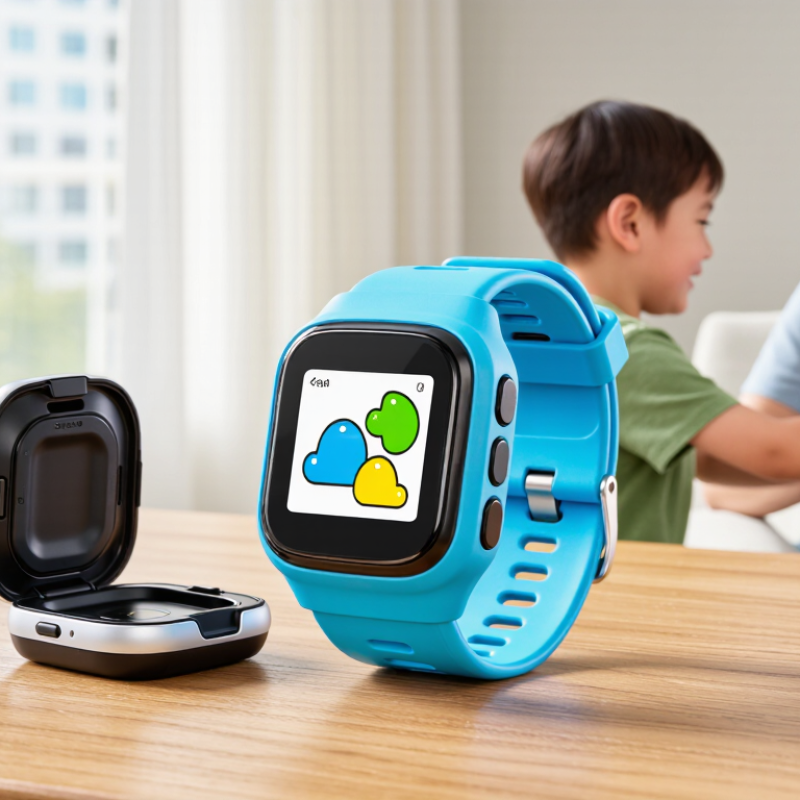
A child safety GPS tracker watch is a wearable device that helps caregivers check a child’s location. It usually combines GPS, mobile networks, and Wi-Fi positioning. GPS works best outdoors, while buildings, trees, and underground areas can reduce accuracy. The watch may also include safe-zone alerts, two-way calling, and an emergency button.
Location updates are not always instant. Network coverage, battery level, and the child’s surroundings affect performance. A responsible caregiver should test the watch near home, school, and common travel routes. Check whether the location refreshes clearly and whether alerts arrive on time. It is easy to overtrust technology. A tracker supports supervision, but it cannot replace communication, sensible boundaries, or adult attention.
Tips: Choose a device with clear privacy settings, strong straps, and simple controls. Test the emergency feature with the child before regular use. Explain when location sharing is active and who can view it. Review permissions often, especially after changing caregivers. Keep the battery charged each night. Also, confirm local network compatibility before purchase, because a watch can look capable but perform poorly without reliable service.
How GPS Tracking Watches for Kids Work in China
A child safety GPS watch in China combines satellite positioning, mobile networks, Wi-Fi, and Bluetooth. Its location chip reads signals from satellites, including China’s BeiDou system, then sends coordinates through a SIM or eSIM connection. Parents can view the position through a mobile application.
Indoors, the watch may switch to Wi-Fi or nearby Bluetooth signals. This improves accuracy near schools, apartment blocks, and shopping centres. Tall buildings still create errors. A displayed location may be several metres away. Sometimes farther. The watch can also support geofencing, emergency calls, voice messages, and low-battery alerts. These functions depend on network coverage and battery condition.
China’s 54th Statistical Report on Internet Development reported 1.092 billion internet users by June 2024, while mobile access reached 99.7% of users. This strong mobile environment supports connected children’s devices, but coverage is not equal everywhere. Rural roads, underground areas, and crowded buildings may reduce tracking quality. Parents should test the watch near home and school before relying on it.
The International Telecommunication Union recommends privacy protection and data minimisation for connected devices. Therefore, families should check permission settings, storage practices, emergency contacts, and account security. A practical test matters more than a feature list. The “best” watch is not automatically the most expensive one. It should offer stable positioning, clear alerts, comfortable wearing, and reliable battery life. I would still question any device claiming perfect real-time accuracy. None is perfect.
Key Safety Features to Compare Before Buying
China Best Child Safety GPS Tracker Watch for Kids?
Choosing a child safety GPS tracker watch requires more than checking location accuracy. A dependable device should combine GPS, Wi-Fi, and cellular positioning, because signals can weaken inside schools or apartment buildings. Test the location function near walls, stairwells, and playgrounds. Small errors matter when a child is waiting outside a gate.
Look for an easy SOS button, clear two-way calling, and contact controls managed by parents. Geofencing can notify you when a child leaves a defined area, such as school or home. Check battery performance under regular calling and tracking, not only standby claims. Water resistance also matters during rainy walks, but it does not always protect against swimming. Review the privacy settings carefully. Location history should be limited, protected, and easy to delete.
Tips: Ask the child to press the SOS button during a calm practice drill. Confirm that the alert reaches two adults. Check whether the watch works with local network coverage and whether its charging port is secure. A bulky watch may be technically strong but uncomfortable for a small wrist. No device is perfect. GPS may lag, batteries may drain, and children may forget to charge it. A short trial at home can reveal more than a polished specification sheet. Safety depends on the watch, adult supervision, and a child who understands when to ask for help.
China’s Best Child GPS Watch Options by Family Needs
China’s Best Child GPS Watch Options by Family Needs
The best child GPS watch depends on daily routines, not advertising claims. For younger children, choose a simple watch with one-touch calling, clear voice quality, and a reliable emergency button. A secure strap matters too. Loose bands can fail during playground activities. Parents should check whether the watch supports local mobile networks and offers stable indoor positioning.
School-aged children may need classroom controls, contact approval, and quiet hours. A school mode can reduce distractions while preserving emergency access. Families living in busy cities may prefer stronger location updates and safer-area alerts. These features can help when a child leaves school or arrives home. For outdoor families, prioritize battery life, water resistance, readable maps, and durable materials. GPS accuracy may weaken inside concrete buildings, so no device should be treated as exact.
Budget-conscious households can select essential calling and location functions without cameras or entertainment features. Extended family caregivers may value large buttons and straightforward setup. Review the privacy policy carefully, including data storage, account access, and deletion procedures. The lowest price can hide subscription costs or weak after-sales support. That is worth checking.
No watch replaces supervision. In practical testing, alerts can arrive late when signals are blocked or batteries are low. Parents should test emergency contacts, charging habits, and location accuracy before relying on the device. I would also ask children how the watch feels, rather than choosing only from technical specifications. Their comfort affects whether they wear it consistently.
Privacy, Security, and Responsible Use of GPS Watches
China Best Child Safety GPS Tracker Watch for Kids?
A child GPS watch can support safer communication, but privacy must guide every choice. In real family use, location sharing feels helpful during a crowded school trip. It can also become excessive monitoring. Privacy comes first. Choose a device with clear data policies, strong account passwords, encrypted communication, and limited access controls. Ask where location records are stored, how long they remain available, and whether parents can delete them. Avoid products that request unnecessary contacts, photos, or microphone permissions.
Security is not only a technical feature. Parents should update the watch and companion application regularly. They should also review connected accounts after a caregiver changes. Children need an honest explanation of tracking. Explain when location is checked and who can see it. A child should know the watch is for safety, not secret surveillance. I may still check too often when I feel worried. That reaction deserves reflection.
Tips: Set location alerts only for practical places, such as school or home. Use two-factor authentication when available. Turn off unused recording features. Test the emergency contact function with the child, then explain its limits. Check battery life before travel. Review privacy settings monthly. If the company cannot clearly answer basic security questions, consider another option. Small settings matter.
FAQS
GPS, Wi-Fi, and cellular signals work together. A signal may weaken inside schools or apartment buildings. Test accuracy near walls, stairwells, and playground gates.
The button should be easy for a child to press. Practice during a calm drill. Confirm that alerts reach two trusted adults.
Geofencing can notify parents when a child leaves school or home. Use only practical areas. Too many alerts may create unnecessary worry.
Test the watch during ordinary calls and location tracking. Standby claims are not enough. A low battery can weaken the safety plan.
Not always. Rain protection may not cover swimming or prolonged water exposure. Check the specific limits before outdoor activities.
Check where location records are stored and how long they remain available. Parents should control access and delete old records. Less data is often safer.
Explain who can see the child’s location and when it is checked. The watch should support safety, not secret surveillance. I may still check too often.
Try it at home for a short period. Check local network coverage, charging security, comfort, and contact controls. Children may forget to charge it. Adult supervision still matters.
Conclusion
A Child Safety GPS Tracker Watch is a wearable device designed to help parents stay connected with their children while supporting everyday safety. In China, these watches typically use GPS, mobile networks, Wi-Fi, and location-based services to provide positioning, communication, and activity updates. Important features to compare include location accuracy, emergency calling, two-way voice communication, geofencing alerts, battery life, water resistance, ease of use, and compatibility with local network services.
The best choice depends on each family’s needs, such as a child’s age, daily travel routine, school environment, and the level of communication required. Parents should also carefully consider privacy and data security before purchasing. Responsible use means explaining the watch’s purpose to the child, limiting unnecessary tracking, using strong account protection, checking permissions, and selecting a product with clear data-handling practices. When used thoughtfully, a Child Safety GPS Tracker Watch can support communication and reassurance without replacing parental guidance or personal safety education.