Choosing a Standalone 4G Kids Smartwatch is not simply about picking the brightest screen or the lowest price. The device may become a child’s daily communication tool, location aid, and learning accessory. It should fit small wrists comfortably, survive playground drops, and remain usable during a busy school day. A careful buying process also considers network coverage, activation costs, battery performance, and age-appropriate controls. These details often matter more than colorful watch faces.
This guide presents seven practical tips for comparing models with clearer judgment. It examines 4G compatibility, call quality, GPS accuracy, parental settings, privacy protection, battery life, and build quality. Manufacturer specifications provide a starting point, but independent reviews can reveal missing details, such as weak indoor reception or confusing menus. Check the supported bands with your local carrier. Do not assume every SIM card will work. Small print matters.
No checklist is perfect.
A watch can pass laboratory tests yet frustrate a child in real life. A parent may value precise location updates, while a child may care more about comfort and simple controls. That difference deserves attention. Reliable choices balance technical evidence with everyday experience. Look for transparent privacy policies, secure account access, responsive customer support, and realistic operating claims. The goal is not to find the most advanced watch. It is to choose a dependable device that supports safe communication without creating unnecessary complexity or hidden expense.
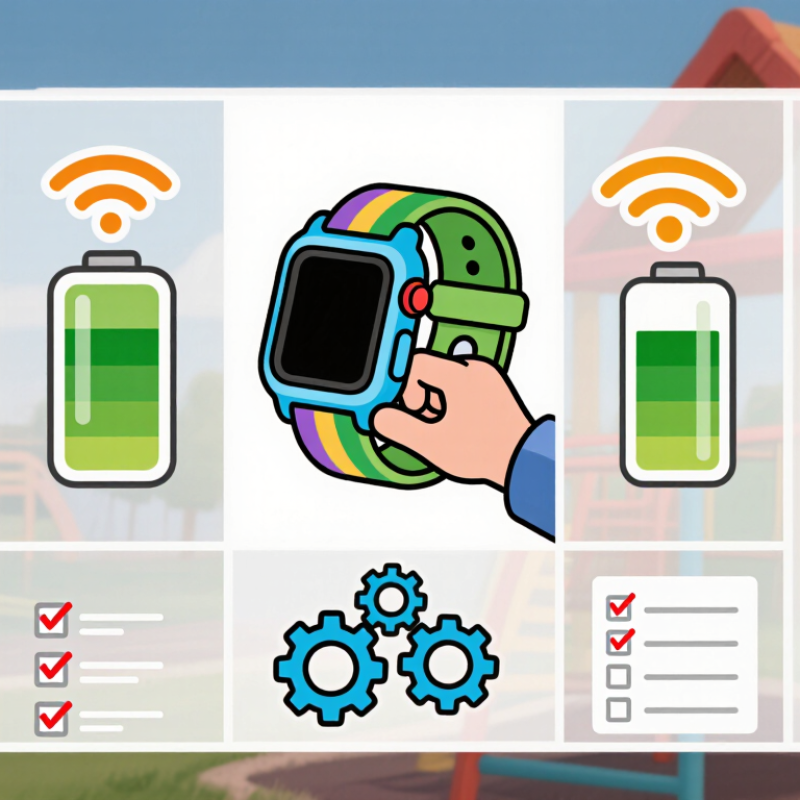
A standalone 4G kids smartwatch connects to mobile networks without a parent’s phone nearby. It usually uses a SIM or eSIM for calls, messages, GPS, and voice notes. The watch may also offer geofencing, school mode, and an SOS button. However, features vary by network and country. Some models lose service when local 3G networks shut down.
This category reflects wider mobile growth. GSMA’s Mobile Economy 2024 report estimated 5.6 billion unique mobile subscribers worldwide in 2023. That figure shows why cellular wearables can work beyond home Wi-Fi. Yet coverage remains more important than advertising claims. Test the watch near school gates, indoors, and during a short walk. My practical concern is battery life. Frequent location updates can drain a small battery before bedtime.
Tip: Check supported 4G bands, SIM requirements, and monthly data costs before buying.
Tip: Ask whether location data is encrypted and whether parents can delete account records. The UK Information Commissioner’s Office stresses privacy-by-design for children’s services. Choose clear consent controls, limited contact lists, and strong passwords.
Tip: Try the SOS process yourself. It should reach approved contacts quickly and show a clear location. An emergency feature that feels confusing is not useful.
Battery tests are imperfect, too. Cold weather, weak signals, and constant tracking can change results.
A standalone 4G watch needs more than a SIM slot. Check its supported LTE bands against local network bands. Ericsson’s November 2024 Mobility Report recorded about 5.1 billion global 4G subscriptions in 2023. However, network availability still varies sharply between cities, buildings, and rural roads. Use an independent coverage map, not only the seller’s statement. Test the watch near windows, indoors, and during a short walk. Coverage is not a promise.
Confirm that the watch supports VoLTE, because many operators are retiring older voice networks. Ask whether its SIM supports voice, SMS, and data, rather than data alone. Then test three calls: a clear indoor call, a moving outdoor call, and a call in a weak-signal area. Listen for delay, robotic voices, and dropped connections. The GSMA’s Mobile Economy 2024 report notes that 4G remains a major global connection layer, but regional shutdown schedules differ. This detail is easy to miss.
Check whether approved contacts can call the watch directly. Some models allow only app-based calling, which is not the same experience. Review microphone volume, speaker clarity, contact controls, and call-history visibility. Ofcom’s 2024 Connected Nations report shows that mobile coverage differs by location and operator, so one network test is insufficient. Ask about roaming, APN settings, data limits, and battery life during calls. I would also question vague claims such as “full coverage.” They sound reassuring, but they are not measurable. A five-minute real-world call often reveals more than a polished specification sheet.
A standalone 4G kids smartwatch should support safety without becoming a child’s constant surveillance device. Check whether its location service uses GPS, Wi-Fi, and nearby mobile towers. GPS works best outdoors, while indoor positioning can drift. A map dot is not proof of exact location.
Look for a clear SOS button that children can press quickly, even when nervous. It should contact approved adults and show the watch’s recent location. Two-way calling matters, but limit contacts to trusted numbers. Geofencing can alert parents when a child leaves school or arrives home. Set boundaries carefully; a small delay is normal. Test them before relying on alerts.
Battery life is a safety feature, not a minor convenience. A watch that dies during a long school day cannot share its location. Check charging habits, low-battery notifications, water resistance, and signal performance near concrete buildings. Privacy settings deserve equal attention. Choose data controls, transparent storage rules, and an option to delete location history. During testing, walk several familiar routes and compare the map with the child’s real position. Results may be imperfect. That is worth noticing. A device should also allow the child to call for help without feeling watched every minute.
A standalone 4G kids smartwatch should be judged like daily safety equipment, not a colorful toy. According to GSMA Intelligence’s 2024 Mobile Economy report, mobile data traffic continues to grow as connected devices become more common. That makes network efficiency important. Ask how long the battery lasts with location tracking, voice calls, and frequent 4G use. A “three-day” claim may reflect laboratory standby mode. Real use can be much shorter. Test one full school day yourself.
Tip: Compare battery tests fairly. Look for capacity in mAh, charging time, and low-battery alerts. A watch that reaches 20 percent before bedtime may be more practical than one with a higher advertised total. There is no universal smartwatch battery benchmark, which makes manufacturer testing difficult to compare. This is an inconvenient gap.
Durability needs evidence, not thick-looking plastic. Check the stated IP rating against IEC 60529, the international standard for dust and water protection. Also inspect the strap, screen edges, charging contacts, and button size. A child may drop the watch on a playground or press buttons with wet hands. Some protection ratings exclude swimming, soap, or hot water. Read the limitations carefully.
Tip: Test ease of use with the child present. Can they place a call, read a message, and charge it without help? The GSMA’s Mobile Economy research highlights the importance of reliable mobile connectivity, but connectivity cannot fix confusing menus. Large icons help. So does a secure charging cradle. My own preference is simple: fewer features, clearer actions, and a battery indicator that children can understand.
A standalone 4G kids smartwatch needs more than a colorful screen.
Check its privacy design, network compatibility, and real ownership cost before purchase. GSMA Intelligence reported that 4G represented about 60% of global mobile connections in 2023. Coverage still varies widely, however.
Does the watch support your carrier’s LTE bands and VoLTE service? Can it work after older networks close? Is the SIM unlocked? Does the manufacturer explain data collection in clear language? Look for encryption, two-factor account protection, limited location history, and a genuine deletion option. The UK Information Commissioner’s Office says children’s services should use data minimisation and high privacy settings by default. That standard is worth applying at home.
Check whether voice messages, contacts, photos, and location data reach a third-party cloud. Independent security testing matters. So does the update policy. The 2024 IBM Cost of a Data Breach Report placed the global average breach cost at $4.88 million, although that figure covers organisations, not watches. It still shows why weak account security deserves attention.
Calculate the full cost:
watch, activation, monthly data, replacement straps, roaming, and cancellation fees. A cheap device may become expensive within a year.
Battery life also affects safety; a watch that dies during school hours is not very useful. I would test indoor reception, GPS accuracy, and emergency calling near home. Marketing specifications can disappoint in ordinary places.
It connects directly to a mobile network through a SIM or eSIM.
Confirm supported 4G bands and voice-over-LTE service in your area.
GPS usually works best outdoors.
A child should press it quickly when frightened or confused.
Battery life is part of safety, not merely convenience.
Choose clear consent settings, strong passwords, and two-factor protection.
Count the watch, activation, monthly data, replacement straps, roaming, and cancellation fees.
Test indoor reception, GPS accuracy, emergency calling, and geofence alerts.
Choosing a Standalone 4G Kids Smartwatch requires more than checking its appearance or list of features. Unlike watches that depend on a nearby smartphone, a standalone model uses its own mobile connection for voice calls, messaging, and selected online services. Parents should confirm reliable 4G coverage, clear two-way calling, easy contact management, and support for emergency communication. Location features are also important, including GPS accuracy, location history, safe-zone alerts, and controls that help protect a child’s privacy.
A practical watch should offer enough battery life for a full day, resist everyday drops and splashes, and have simple controls that children can use confidently. Before buying, check whether the watch works with the intended mobile network, whether its software and location services are compatible with the parent’s phone, and whether updates are provided. Finally, compare the total cost, including the device, service plan, and any extra fees, while reviewing data collection settings and parental controls.